Running a peer-review workshop at your school
Princeton Journal of Pre-Collegiate Research

Running a peer-review workshop at your school: a practical guide for educators and student researchers
This post answers a specific question: how does an educator or student leader design and run a peer-review workshop at the high school level that produces genuine critical feedback, not polite agreement? It is written for teachers, club advisors, and advanced students in grades 10 through 12 who are supervising or participating in original research. After reading, the reader will be able to structure a workshop session, assign reviewer roles, and guide participants through the evaluation of a real manuscript. Students whose work is ready for formal review beyond the classroom can submit it to the Princeton Journal of Pre-Collegiate Research for independent, qualified peer review.
Introduction
The most consistent reason student research papers fail at the journal submission stage is not weak data or poor writing. It is that the author has never received structured critical feedback before submitting. Running a peer-review workshop at your school addresses this gap directly by training students to evaluate research the way reviewers do: against explicit methodological criteria, not personal preference. Most classroom writing workshops focus on grammar and clarity. A peer-review workshop focuses on whether the research question is answerable, whether the method justifies the conclusion, and whether the evidence actually supports the claims made. These are the criteria that determine whether a paper advances through editorial screening.
What is a peer-review workshop and how does it work?
A peer-review workshop is a structured session in which student researchers exchange draft manuscripts and evaluate them using a standardised rubric, then deliver written and verbal feedback to the author. The process mirrors the blind review model used by academic journals: reviewers assess methodology, evidence quality, logical coherence, and presentation, not the author's effort or intent. A well-run session of 90 minutes can produce substantive feedback on two to three papers.
The core structure of a functional peer-review workshop has four phases. First, the facilitator distributes manuscripts and rubrics at least 48 hours before the session so reviewers arrive having read the work. Second, reviewers complete written evaluations independently before any discussion begins. Third, the group convenes to discuss each paper in a structured format, with the author listening rather than defending. Fourth, the author receives the written evaluations and a summary of the verbal discussion to use during revision.
The rubric is the most important tool in the workshop. A rubric designed for student research should assess five dimensions: clarity of the research question, appropriateness of the methodology to the question, accuracy and completeness of the literature review, validity of the conclusions relative to the data, and quality of the written argument. Each dimension should be scored on a defined scale, with space for written comments. Rubrics that ask only for a numerical score without written explanation produce feedback that authors cannot act on.
Facilitators should assign two reviewers to each paper. Single-reviewer feedback introduces too much individual bias. Two reviewers allow the author to identify points of consensus, which are the most reliable signals of genuine weakness, and points of disagreement, which often reveal ambiguity in the manuscript itself. This two-reviewer structure also mirrors the standard practice at most peer-reviewed journals, where a minimum of two independent reviewers evaluate each submission before an editorial decision is made.
The author's role during the verbal discussion is to listen and take notes, not to explain or justify. This rule is difficult to enforce but essential. When authors are permitted to explain what they meant, reviewers stop evaluating what the manuscript actually says and begin evaluating the author's verbal explanation. The goal of the session is to identify what the manuscript communicates on its own terms.
What happens after the workshop, and how does it connect to formal publication?
A peer-review workshop is most valuable when it is positioned as one stage in a longer revision cycle, not as a one-time event. After the session, authors should be given a defined revision window, typically one to two weeks, to incorporate feedback and produce a revised draft. A second, shorter review session focused only on the changes made can then confirm whether the revisions addressed the core concerns raised in the first round.
This iterative structure prepares students for the revision process at formal journals, where a revise-and-resubmit decision requires the author to respond point by point to each reviewer comment. Students who have experienced this cycle at the school level are significantly better equipped to navigate it when they submit to an external publication. They understand that a request for revision is not a rejection, and they know how to write a response letter that addresses each concern with specific reference to changes made in the manuscript.
Educators running these workshops can also use the published research archive at published issues of PJPCR as a calibration resource. Asking student reviewers to evaluate a published paper using the same rubric before they review their peers' work gives them a benchmark for what a completed, accepted manuscript looks like. This calibration exercise reduces the tendency to over-praise or under-critique, which is the most common failure mode in first-time peer review sessions.
Students whose papers have been through two or more rounds of structured peer review at the school level and have been substantially revised are in a strong position to submit to a formal journal. The peer review process at PJPCR is conducted by qualified reviewers and follows the same evaluative criteria a school workshop should be training students to meet.
What are the most common mistakes when running a peer-review workshop at your school?
The most common mistake is treating the workshop as a writing feedback session rather than a research evaluation session. When facilitators frame the exercise around sentence-level corrections, reviewers default to copy-editing. The consequence is that authors leave with a cleaner draft but with no feedback on whether their methodology is sound or their conclusions are justified. The fix is to specify in the rubric that grammar and style are not evaluated in this session; those belong in a separate editing pass.
The second common mistake is allowing the author to speak during the discussion phase. When authors explain their intentions, reviewers adjust their assessments to match the explanation rather than the manuscript. The consequence is that the feedback reflects what the author meant to write, not what they actually wrote. The fix is a strict facilitation rule: the author may ask one clarifying question at the end of the session, after all feedback has been delivered.
The third mistake is using a rubric that is too general to produce actionable feedback. Rubric items such as "Is the paper well-organized?" or "Is the argument convincing?" invite subjective responses that authors cannot translate into specific revisions. According to guidance from the Council of Science Editors, effective peer review criteria should be tied to verifiable features of the manuscript, such as whether the sample size is reported, whether the statistical method matches the data type, or whether each claim in the discussion is traceable to a result in the findings section. The fix is to rewrite each rubric item as a yes/no or scaled question about a specific, observable feature of the manuscript.
A fourth mistake is running the workshop without a preparation phase. Reviewers who read the manuscript for the first time during the session produce shallow feedback. Distributing manuscripts 48 hours in advance and requiring reviewers to submit written notes before arriving is the single most effective structural change a facilitator can make.
How to run a peer-review workshop at your school, step by step
Select manuscripts. Identify two to four student papers that are complete enough to review: they should have a defined research question, a methods section, results, and a discussion. Incomplete drafts produce incomplete feedback.
Build or adapt a rubric. The rubric should assess research question clarity, methodological appropriateness, evidence quality, conclusion validity, and written argument. Each item should be tied to a specific, observable feature of the manuscript. For discipline-specific guidance, consult the APA format guide for high school research papers as a reference for formatting criteria.
Assign two reviewers per paper. Distribute manuscripts and rubrics at least 48 hours before the session. Require written pre-session notes as a condition of participation.
Open the session with calibration. Spend 15 minutes reviewing one published paper as a group using the rubric before beginning peer evaluations. This aligns reviewer standards before individual papers are discussed.
Run each paper discussion for 20 to 25 minutes. Reviewers present their written assessments. The author listens and takes notes. The facilitator manages time and redirects discussion to rubric criteria if it drifts toward grammar or personal preference.
Collect written evaluations and distribute them to authors. Authors should receive both the completed rubrics and a brief facilitator summary of the verbal discussion within 24 hours of the session.
Set a revision deadline and schedule a follow-up session. A second, shorter session focused on whether revisions addressed the original concerns completes the cycle and prepares students for the formal submission process.
Students who have completed this process and are ready for external peer review can review the submission guidelines at PJPCR to assess whether their work meets the criteria for formal consideration.
PJPCR publishes original research across all academic disciplines from pre-collegiate researchers. If a student's work has been through structured peer review and is ready for formal evaluation, the submission guidelines are available at princeton-jpcr.org/submit.
Frequently asked questions about running a peer-review workshop at your school
What is peer review and why does it matter for high school researchers?
Peer review is the process by which independent evaluators assess a research manuscript against defined criteria before it is accepted for publication. It matters for high school researchers because it provides structured, criteria-based feedback that classroom assignments rarely produce. Exposure to this process before formal submission significantly improves manuscript quality and prepares students for the evaluative standards of academic journals.
How long does a peer-review workshop session take, and how many papers can be reviewed?
A well-structured session of 90 minutes can accommodate two to three papers, with 20 to 25 minutes of discussion per manuscript and 15 minutes for calibration at the opening. Preparation time outside the session, including reading and written pre-review notes, adds approximately 45 to 60 minutes per reviewer per paper. For students submitting to PJPCR, the standard external review timeline is 2 to 3 months; a fast-track option is available for students who need a quicker turnaround.
Do students need a faculty mentor to run a peer-review workshop?
No. A peer-review workshop can be organised and facilitated by a student leader, a research club officer, or a class peer with no formal faculty involvement, provided the rubric is well-designed and the facilitation rules are clearly established. Faculty involvement improves calibration and ensures rubric criteria are methodologically sound, but it is not a prerequisite. For further context on conducting research independently, the post on publishing research without school involvement addresses related questions about independent research pathways.
What makes a high school research paper ready for peer review?
A paper is ready for peer review when it contains a clearly stated research question, a described methodology that is appropriate to that question, reported results, and a discussion that connects the results to the original question without overstating the conclusions. A paper that is missing any of these four components will receive feedback too foundational to be useful in a single session. Reviewers evaluating social science or humanities work should also consult the political science research guide for high school for discipline-specific criteria.
What kinds of research does PJPCR publish, and is it peer reviewed?
The Princeton Journal of Pre-Collegiate Research publishes original research by high school students across the sciences, social sciences, humanities, and interdisciplinary fields. All submissions undergo independent peer review conducted by qualified reviewers before any publication decision is made. Submission and peer review are free; a publication fee applies for accepted papers. Full details about the review criteria and process are available on the peer review process page.
Conclusion
Running a peer-review workshop at your school is one of the most direct interventions available to improve the quality of student research before it reaches a formal journal. The three most actionable takeaways from this guide are: use a rubric tied to specific, observable features of the manuscript rather than general impressions; distribute papers 48 hours in advance and require written pre-session notes; and enforce the rule that authors listen during the discussion phase rather than explain or defend. These three structural choices separate a workshop that produces substantive revision from one that produces polished agreement.
Students who have completed two or more rounds of structured peer review and have revised their manuscripts accordingly are well-positioned for formal submission. If that work is ready for independent evaluation, submit it to PJPCR at princeton-jpcr.org/submit.
Read More

How to write a grant proposal as a student
By
Princeton Journal of Pre-Collegiate Research
Read more
Free resources that replace research funding
By
Princeton Journal of Pre-Collegiate Research
Read more
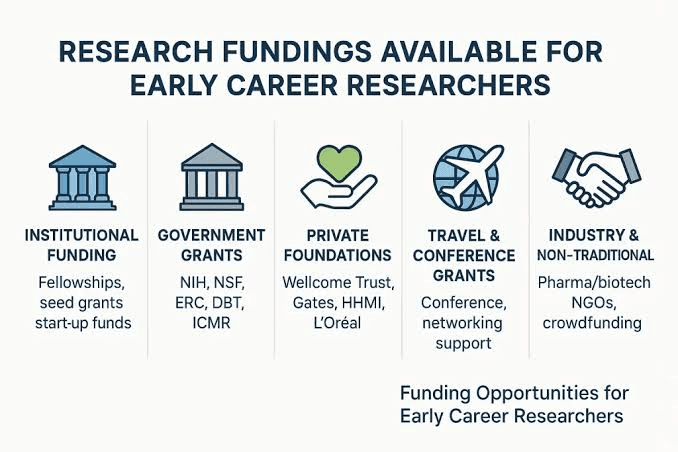
Corporate and nonprofit programs that fund student research
By
Princeton Journal of Pre-Collegiate Research
Read more

Science fair grants and material stipends explained
By
Princeton Journal of Pre-Collegiate Research
Read more

Crowdfunding a student research project: does it work
By
Princeton Journal of Pre-Collegiate Research
Read more

How much does a research project actually cost
By
Princeton Journal of Pre-Collegiate Research
Read more

How to ask your school to fund your project
By
Princeton Journal of Pre-Collegiate Research
Read more

Grants for high school research projects: what exists
By
Princeton Journal of Pre-Collegiate Research
Read more

How to start a research club at your school
By
Princeton Journal of Pre-Collegiate Research
Read more

How to organize a school research symposium
By
Princeton Journal of Pre-Collegiate Research
Read more

Turning a school club into a research pipeline
By
Princeton Journal of Pre-Collegiate Research
Read more

How to start a student research journal at your school
By
Princeton Journal of Pre-Collegiate Research
Read more

How to find a faculty sponsor for a research club
By
Princeton Journal of Pre-Collegiate Research
Read more

How to propose an independent study for research credit
By
Princeton Journal of Pre-Collegiate Research
Read more
Running a peer-review workshop at your school
By
Princeton Journal of Pre-Collegiate Research
Read more

How to get school funding for student research
By
Princeton Journal of Pre-Collegiate Research
Read more

How to do research as a team of students
By
Princeton Journal of Pre-Collegiate Research
Read more

Dividing work fairly in a group research project
By
Princeton Journal of Pre-Collegiate Research
Read more

Group research vs solo research: pros and cons
By
Princeton Journal of Pre-Collegiate Research
Read more

Resolving disagreements in group research
By
Princeton Journal of Pre-Collegiate Research
Read more
What to do when a co-author stops contributing
By
Princeton Journal of Pre-Collegiate Research
Read more