IJHSR vs Princeton JPCR
Princeton Journal of Pre-Collegiate Research
You have finished your research. Now comes the harder question: where do you publish it? When comparing IJHSR vs Princeton JPCR, the differences are not cosmetic. They go straight to the core of what a publication credential actually means to a college admissions officer, a university professor, or a future employer reviewing your resume.
This comparison is designed to give you a clear, honest picture of both journals. We cover peer review standards, indexing, audience reach, submission process, and the long-term value of each credential. By the end, you will have the information you need to make a decision that serves your academic future.
What Is IJHSR?
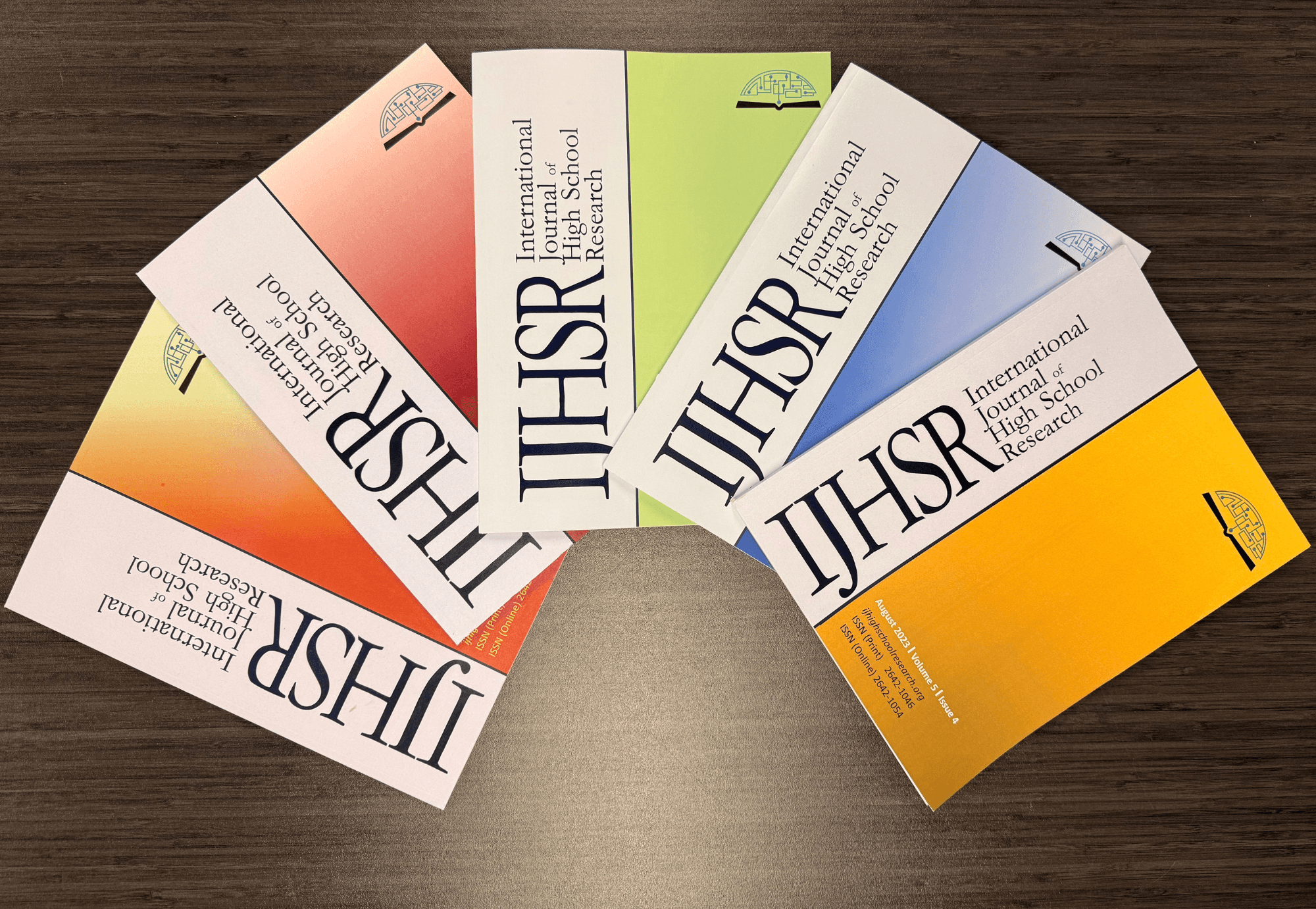
IJHSR stands for the International Journal of High School Research. It positions itself as a peer-reviewed publication for pre-collegiate students across multiple disciplines. The journal accepts submissions from high school researchers globally and publishes work in STEM, social sciences, and humanities.
IJHSR operates on a rolling submission model, meaning papers are reviewed and published continuously rather than in fixed annual issues. The journal charges an article processing fee upon acceptance. Its editorial board includes student reviewers alongside faculty advisors, which is a common structure in the pre-collegiate publishing space.
The journal has grown in visibility over the past several years as demand for high school research publication outlets has increased. That growth, however, raises a question worth asking directly: does wider availability translate into stronger academic credibility?
What Is Princeton JPCR?
The Princeton Journal of Pre-Collegiate Research (PJPCR) is an international, peer-reviewed journal publishing original research by high school students across 50+ academic disciplines. Every submission undergoes rigorous double-blind peer review (no shortcuts, no rubber stamps). Accepted papers receive a DOI, making them permanently citable and findable by anyone conducting academic searches.
PJPCR publishes research across STEM, humanities, social sciences, and interdisciplinary fields. The journal has reached over 50,000 published papers, with contributors spanning six continents. Published issues are available publicly, and the archive stretches back to 2019, giving the journal a multi-year track record that reviewers and admissions readers can verify independently.
PJPCR is not affiliated with Princeton University. That disclaimer is placed prominently and repeated consistently because transparency matters. The journal stands on its own record, not borrowed prestige.
IJHSR vs Princeton JPCR: Peer Review Standards
Peer review is the mechanism that separates academic publishing from self-publishing. The rigor of that process determines whether your publication credential carries weight in a competitive environment.
How IJHSR Reviews Submissions
IJHSR uses a peer review process that includes both student and faculty reviewers. The journal describes its review as blind, though the specific structure of that review (single-blind versus double-blind) is not always made explicit in publicly available documentation. Review timelines vary, and the rolling submission model means there is no fixed editorial calendar governing the process.
For researchers who need flexibility and a faster turnaround, that model has practical appeal. The trade-off is that the absence of a structured editorial calendar can make it harder to verify consistency in review standards across submissions.
How Princeton JPCR Reviews Submissions
PJPCR uses a strict double-blind peer review process. Reviewers do not know who submitted the paper. Authors do not know who reviewed it. That structure removes bias from the evaluation and ensures the work is judged on its intellectual merit alone.
The editorial team applies the same standards used in professional academic publishing. Reviewers assess methodology, argument quality, evidence, and contribution to the field. Acceptance is not guaranteed, and that selectivity is precisely what makes the credential meaningful. You can review the Submission Guidelines to understand exactly what reviewers expect before you submit.
IJHSR vs Princeton JPCR: Indexing and Discoverability
A published paper that cannot be found is a credential that cannot be verified. Indexing determines whether your work exists in the permanent academic record or disappears behind a paywall or an obscure database.
IJHSR Indexing
IJHSR lists several indexing partnerships on its website. The specific databases and their tier within academic indexing hierarchies vary, and researchers should verify current indexing status directly with the journal before submitting. Indexing arrangements can change, and the value of a publication credential depends partly on where the paper lives after publication.
Princeton JPCR Indexing and DOI Assignment
Every paper accepted by PJPCR receives a Digital Object Identifier (DOI). A DOI is not a formality. It is a permanent, unique address for your paper in the global academic infrastructure. It exists forever, findable by anyone. Admissions officers, professors, and future collaborators can locate and verify your work with a single search.
The journal's published issues are publicly accessible, and the archive from 2022 through the current 2025 volume demonstrates consistent publication output. That continuity matters. A journal with a verifiable multi-year archive signals institutional stability, not a temporary platform that may disappear in two years.
IJHSR vs Princeton JPCR: Submission Process and Researcher Support
The submission experience shapes how much you learn from the process. A journal that provides structured guidance produces better researchers, not just published papers.
Submitting to IJHSR
IJHSR accepts submissions through its online portal. The journal provides formatting guidelines and accepts papers in standard academic formats. The rolling review model means you can submit at any time, which reduces deadline pressure. Feedback from reviewers is provided upon decision, giving authors some basis for revision if the paper is not accepted on the first submission.
Submitting to Princeton JPCR
PJPCR provides a structured submission pathway designed to prepare high school researchers for the expectations of professional academic publishing. The Submission Form is straightforward, and the Submission Guidelines are detailed and publicly available. Researchers know exactly what is expected before they begin.
The journal also maintains resources that help researchers avoid the most common errors before they submit. Reviewing Common Mistakes To Avoid is a practical step that improves submission quality and increases the likelihood of acceptance. The process is designed so that you leave a better researcher than you arrived.
Credibility Signals: What Admissions Readers Actually See
College admissions is a credibility contest. Every element of your application is evaluated for authenticity, rigor, and relevance. A publication credential is only as strong as the journal behind it.
Admissions officers at selective universities are increasingly familiar with the landscape of pre-collegiate research journals. They know the difference between a journal with a genuine peer review process and one that functions more as a paid publication service. The questions they ask are direct: Is the review process verifiable? Is the journal indexed? Does the publication have a track record?
PJPCR answers all three questions clearly. The double-blind review process is documented. Every paper has a DOI. The journal has published continuously since 2019, with issues spanning from 2019 to the current year. Researchers who have published with PJPCR have gone on to selective universities with a credential that holds up to scrutiny. You can read their outcomes on the Success page.
Discipline Coverage and Research Scope
Not every high school researcher works in STEM. The best research journals reflect that reality.
IJHSR covers multiple disciplines, with a broad scope that includes science, social science, and humanities research. The journal's scope is designed to accommodate the range of interests that high school researchers bring to their work.
PJPCR covers 50+ academic disciplines. That number is not a marketing figure. It reflects the actual range of published papers across the journal's archive. Researchers in biology, economics, literary criticism, environmental science, political theory, and mathematics have all published in PJPCR. The interdisciplinary scope means that no matter what your research question is, there is a home for it here.
The Long-Term Value of Your Publication
Think beyond the application cycle. A published paper is not just a line on a resume. It is a contribution to the academic record. It is something a professor can read before your first class. It is something a research supervisor can cite when recommending you for a competitive program.
The permanence of a DOI-indexed publication cannot be overstated. Five years from now, when you are applying to graduate programs or research fellowships, that paper will still be there, still findable, still verifiable. The credential compounds over time rather than expiring with your high school transcript.
PJPCR is built with that long-term value in mind. The journal's commitment to rigorous review, permanent indexing, and public accessibility means that your work enters the academic record in a form that lasts. Browse the Issues archive to see the breadth and quality of published research across every year of the journal's history.
Making the Decision: IJHSR vs Princeton JPCR
Both journals serve high school researchers who want to publish original work. The question is not whether to publish. It is where to publish, and why that choice matters.
If your priority is speed and scheduling flexibility, IJHSR's rolling submission model has practical advantages. If your priority is the strongest possible credential, the most rigorous peer review process, and a publication that holds up to scrutiny from admissions officers, professors, and future employers, the choice points clearly toward PJPCR.
The double-blind review process, the DOI assignment, the multi-year publication history, the 50+ discipline scope, and the documented outcomes of published researchers all point in the same direction. PJPCR is built for researchers who want their work to mean something beyond the application cycle.
Ready to Submit Your Research?
The comparison between IJHSR vs Princeton JPCR comes down to a single question: what do you want your publication to represent? A credential that checks a box, or a credential that demonstrates genuine intellectual contribution to an academic field?
PJPCR exists because high school researchers deserve a publication venue that takes their work seriously. No shortcuts. No rubber stamps. Just rigorous peer review and a permanent place in the academic record for research that earns it.
Review the Submissions page to understand the full process, check the Submission Guidelines to prepare your manuscript, and take the first step toward a publication credential that lasts.
Read More

APA format for high school research papers: complete guide
By
RISE Research
Read more

MLA format for research papers: when and how
By
RISE Research
Read more

APA vs MLA vs Chicago: which to use for your paper
By
RISE Research
Read more

How to cite a dataset
By
RISE Research
Read more

In-text citations vs footnotes: how each works
By
RISE Research
Read more

What is a p-value, explained for high school researchers
By
RISE Research
Read more

What is regression analysis and when do you use it
By
RISE Research
Read more

What is standard deviation and why it matters
By
RISE Research
Read more

What is a t-test and when do you need one
By
RISE Research
Read more

What is effect size and why reviewers care
By
RISE Research
Read more

Common statistical mistakes in student papers
By
RISE Research
Read more

Research for biology majors: what to publish before applying
By
https://princeton-jpcr.org/
Read more

Research for economics majors
By
https://princeton-jpcr.org/
Read more

Research for political science majors
By
https://princeton-jpcr.org/
Read more

Research for English and humanities majors
By
https://princeton-jpcr.org/
Read more

Research for neuroscience majors
By
https://princeton-jpcr.org/
Read more

Undecided major: what research keeps your options open
By
https://princeton-jpcr.org/
Read more

Summer research timeline: June to August week by week
By
Princeton Journal of Pre-Collegiate Research
Read more

Research goals to set at the start of the school year
By
Princeton Journal of Pre-Collegiate Research
Read more

How to finish your research paper before finals season
By
Princeton Journal of Pre-Collegiate Research
Read more

New year research resolutions that actually stick
By
Princeton Journal of Pre-Collegiate Research
Read more