How to handle criticism of your research
Princeton Journal of Pre-Collegiate Research

How to handle criticism of your research: a guide for high school students
Receiving critical feedback on original research is one of the most productive experiences a student researcher can have, and one of the most misunderstood. Most students who abandon a paper after peer review do so not because the feedback was fatal to their work, but because they did not know how to interpret and act on it. This guide explains how to handle criticism of your research at every stage, from informal mentor feedback to formal peer review, so that critical comments strengthen your paper rather than stop it.
How do you handle criticism of your research as a high school student?
Handling criticism of your research means separating the critique of the work from a judgement of your ability, then categorising each comment as a structural issue, a methodological concern, or a matter of clarity. Most peer review feedback falls into one of these three categories. Address each category systematically, document every change, and resubmit with a clear response letter explaining what you changed and why.
The single most important reframe is this: critical feedback is editorial information, not a verdict. A reviewer who identifies a flaw in your methodology is giving you the precise information you need to produce a stronger paper. A reviewer who says nothing has given you nothing to work with.
When you receive feedback, whether from a teacher, a mentor, or a formal peer reviewer, follow this sequence.
Read all feedback before responding to any of it. Students who respond to the first critical comment before reading the full review often miss the larger pattern. Read everything once without making changes.
Categorise each comment. Label every piece of feedback as one of the following: structural (the argument or organisation needs to change), methodological (the research design or data handling is questioned), or presentational (clarity, citation format, or language). Each category requires a different type of revision.
Identify which comments are mandatory and which are discretionary. In formal peer review, comments labelled as major revisions are required for resubmission. Minor revisions are expected but may be addressed with a brief explanation if you disagree. Discretionary comments from informal reviewers can be accepted or declined with a clear rationale.
Draft a response letter before revising the paper. For each comment, write one sentence stating what you changed or why you did not change it. This forces you to engage with every piece of feedback deliberately rather than selectively.
Revise the paper using the response letter as your guide. Work through the document systematically. Do not revise by feel. Revise by category, starting with structural issues, then methodology, then presentation.
Ask a second reader to review your revised draft before resubmission. A fresh reader will identify whether your revisions resolved the original concerns or introduced new ones. This is particularly important after substantial structural changes.
Students who follow this sequence consistently produce stronger revisions than those who revise reactively. The process is not about satisfying reviewers. It is about producing the most accurate and well-supported version of your argument.
What happens after you submit your research paper and receive reviewer comments?
Understanding the formal peer review process makes critical feedback significantly easier to interpret. When a paper is submitted to a journal, it first undergoes an editorial screening. Papers that do not meet basic standards for originality, scope, or formatting are desk-rejected at this stage. This type of rejection does not reflect the quality of the underlying research. It reflects a mismatch between the submission and the journal's requirements.
Papers that pass initial screening are assigned to qualified peer reviewers with expertise in the relevant discipline. Reviewers assess the paper's originality, methodological soundness, clarity of argument, and contribution to the field. They return one of four recommendations: accept, accept with minor revisions, accept with major revisions, or reject.
An accept with major revisions decision is not a rejection. It is an invitation to revise and resubmit. Most published papers in peer-reviewed journals go through at least one round of revision. According to the American Psychological Association, revision and resubmission is the norm in academic publishing, not the exception. Students who treat a major revision request as a failure misunderstand how the process works.
A rejection with reviewer comments is also more useful than it appears. The comments tell you specifically what the reviewers found insufficient. That information is directly applicable to your next submission, whether to the same journal after substantial revision or to a different venue. You can learn more about how this process works by reviewing the peer review process at PJPCR before you submit.
What are the most common mistakes students make when handling research criticism?
The most common error is treating all feedback as equally urgent. Students frequently spend significant revision time on minor presentational comments while leaving major methodological concerns unaddressed. The consequence is a revised paper that reads more clearly but remains unpublishable because the core issue was not resolved. Fix this by categorising feedback before touching the document.
The second common mistake is revising without documenting changes. Students who revise directly in the manuscript without a response letter often lose track of what they changed and why. When a reviewer or editor asks why a particular passage was altered, they cannot answer. A response letter, even an informal one for non-journal feedback, creates a record that supports both resubmission and future drafts.
The third mistake is dismissing feedback that feels unfair. A reviewer who misunderstood your argument may have done so because the argument was unclear, not because the reviewer was inattentive. Before concluding that a comment reflects a misreading, ask whether the misreading was made possible by your writing. According to the Council of Science Editors, ambiguity in academic writing is among the most frequently cited reasons for revision requests in peer review.
The fourth mistake is waiting too long to revise. Students who set aside critical feedback for weeks often lose the contextual memory needed to make precise revisions. Aim to begin categorising and responding to feedback within 48 to 72 hours of receiving it, even if the full revision takes longer.
How to handle criticism of your research, step by step
Read all feedback in full before making any changes to your manuscript.
Categorise every comment as structural, methodological, or presentational.
Create a response document with one row per comment. Note whether you will revise, partially revise, or decline, and write one sentence of rationale for each decision.
Revise structural issues first. These affect the logic and organisation of your entire argument. Resolving them often changes which methodological and presentational revisions are actually necessary.
Address methodological comments with specific reference to your data, your sources, or your research design. Vague responses to methodological concerns are the most common cause of second-round rejection.
Complete presentational revisions last. Check citation formatting against the required style guide. Read the revised paper aloud to catch unclear sentences.
If the feedback came from a formal journal submission, submit your response letter alongside the revised manuscript. Review the submission guidelines for the specific format required.
If you are working toward publication and your research addresses an original question across any academic discipline, the Princeton Journal of Pre-Collegiate Research publishes original, peer-reviewed work by high school students. Submission and peer review are free, and a publication fee applies for accepted papers. Review the submission guidelines at princeton-jpcr.org/submit.
Frequently asked questions about how to handle criticism of your research
What is a peer review comment and how is it different from a teacher's feedback?
A peer review comment is a written assessment from a qualified subject-matter reviewer evaluating the originality, methodology, and argument of your paper against publishable standards. Teacher feedback typically focuses on learning outcomes and writing quality within a course context. Peer review comments are binding in the sense that unaddressed major concerns will prevent publication, whereas teacher feedback is advisory.
How long does it take to go through peer review and receive feedback?
The standard peer review and publication timeline at most student research journals is 2 to 3 months from submission to final decision. PJPCR follows a standard timeline of 2 to 3 months. A fast-track option is available for students who need a quicker turnaround, bringing the timeline to 2 to 4 weeks. Plan your revision timeline accordingly, as major revisions typically require 2 to 4 weeks of focused work.
Do I need a faculty mentor to respond to peer review comments?
No. A faculty mentor is not required to revise a paper in response to peer review. Many high school students handle revisions independently. A mentor can be useful for interpreting methodological comments that require specialist knowledge, but the revision process itself is the student's responsibility. If you need guidance on finding support, the post on emailing a professor or mentor about your research provides a practical starting point.
What makes a revised research paper strong enough to be accepted after criticism?
A strong revision directly addresses every major concern raised by reviewers, documents each change in a response letter, and does not introduce new methodological problems in the process of fixing old ones. Reviewers assess whether the revision is substantive, not just cosmetic. Papers that add clarifying sentences without addressing the underlying methodological concern are rarely accepted on resubmission. For guidance on handling data-related feedback specifically, the post on handling conflicting data in your research honestly addresses one of the most frequently raised reviewer concerns.
What kinds of research does PJPCR publish, and is it peer reviewed?
PJPCR publishes original research by pre-collegiate students across all academic disciplines, including the sciences, social sciences, humanities, and interdisciplinary fields. All submissions undergo peer review by qualified reviewers. The journal is selective and does not guarantee acceptance. Published work is freely accessible to the public. You can browse published issues to assess the scope and standard of accepted work before submitting.
Conclusion
Handling criticism of your research well is a learnable skill, not a personality trait. The students who produce the strongest revised papers are not those who received the least criticism. They are those who categorised feedback systematically, responded to every comment deliberately, and revised in the correct order: structure first, methodology second, presentation last. Rejection and revision are standard features of academic publishing, not signs that a paper is beyond rescue.
If your research is original, methodologically sound, and ready for peer review, submit it to PJPCR at princeton-jpcr.org/submit.
Read More

How to write a grant proposal as a student
By
Princeton Journal of Pre-Collegiate Research
Read more

Free resources that replace research funding
By
Princeton Journal of Pre-Collegiate Research
Read more
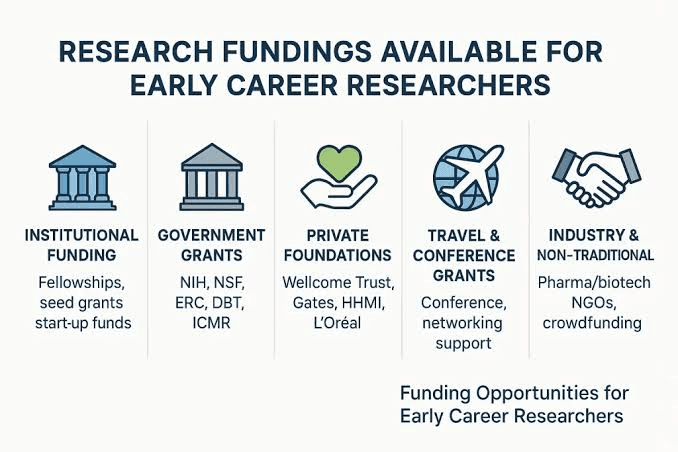
Corporate and nonprofit programs that fund student research
By
Princeton Journal of Pre-Collegiate Research
Read more

Science fair grants and material stipends explained
By
Princeton Journal of Pre-Collegiate Research
Read more

Crowdfunding a student research project: does it work
By
Princeton Journal of Pre-Collegiate Research
Read more

How much does a research project actually cost
By
Princeton Journal of Pre-Collegiate Research
Read more

How to ask your school to fund your project
By
Princeton Journal of Pre-Collegiate Research
Read more

Grants for high school research projects: what exists
By
Princeton Journal of Pre-Collegiate Research
Read more

How to start a research club at your school
By
Princeton Journal of Pre-Collegiate Research
Read more

How to organize a school research symposium
By
Princeton Journal of Pre-Collegiate Research
Read more

Turning a school club into a research pipeline
By
Princeton Journal of Pre-Collegiate Research
Read more

How to start a student research journal at your school
By
Princeton Journal of Pre-Collegiate Research
Read more

How to find a faculty sponsor for a research club
By
Princeton Journal of Pre-Collegiate Research
Read more

How to propose an independent study for research credit
By
Princeton Journal of Pre-Collegiate Research
Read more

Running a peer-review workshop at your school
By
Princeton Journal of Pre-Collegiate Research
Read more

How to get school funding for student research
By
Princeton Journal of Pre-Collegiate Research
Read more

How to do research as a team of students
By
Princeton Journal of Pre-Collegiate Research
Read more

Dividing work fairly in a group research project
By
Princeton Journal of Pre-Collegiate Research
Read more

Group research vs solo research: pros and cons
By
Princeton Journal of Pre-Collegiate Research
Read more

Resolving disagreements in group research
By
Princeton Journal of Pre-Collegiate Research
Read more
What to do when a co-author stops contributing
By
Princeton Journal of Pre-Collegiate Research
Read more