High school research opportunities in Kenya
Princeton Journal of Pre-Collegiate Research
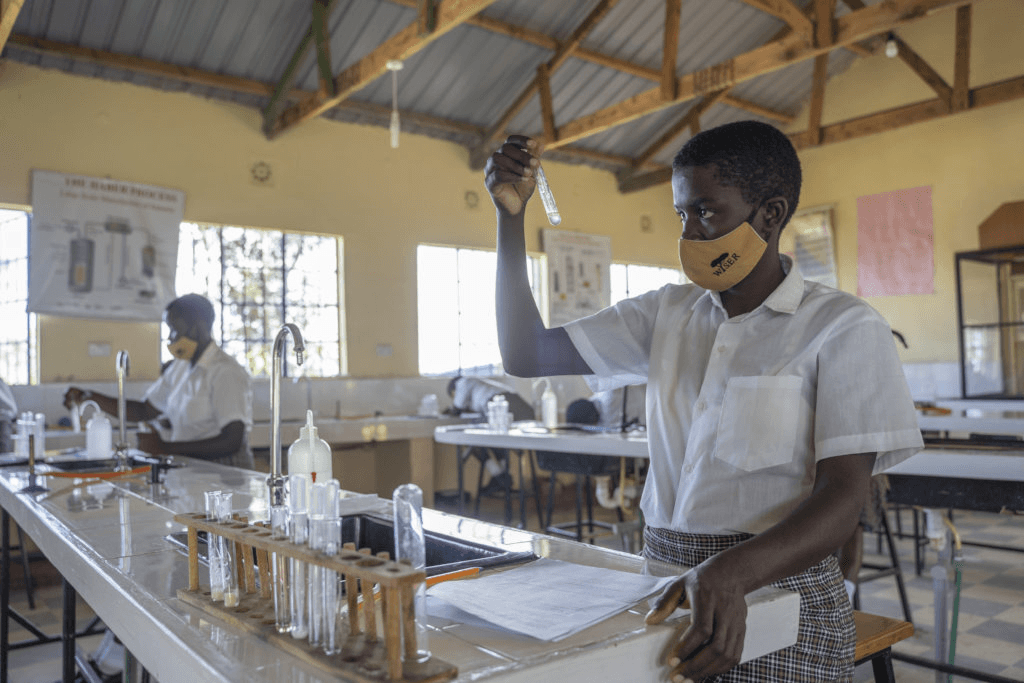
Kenya is producing some of the most motivated young researchers in the world, and the infrastructure to support them is growing fast. If you are a Kenyan high school student asking where to direct your intellectual ambition, the answer is: right here, right now.
High school research opportunities in Kenya span university partnerships, government-backed science programs, international competitions, and peer-reviewed publication pathways. This guide maps the landscape clearly so you can choose the path that fits your goals, your discipline, and your timeline.
Why Research Matters Before University
Original research at the pre-collegiate level is not a bonus credential. It is a signal. It tells university admissions committees, scholarship panels, and future employers that you can identify a problem, design a method, gather evidence, and defend a conclusion. That skill set is rare at any age.
Kenyan students who engage in structured research before completing their Kenya Certificate of Secondary Education (KCSE) consistently stand out in competitive university applications, both locally at the University of Nairobi and internationally at institutions across the UK, US, and beyond. The earlier you start, the more time you have to refine your work and build a publication record.
High School Research Opportunities in Kenya: An Overview
The ecosystem for pre-collegiate research in Kenya has expanded significantly over the past decade. Opportunities now exist across STEM, social sciences, humanities, and interdisciplinary fields. Below is a structured breakdown of the most accessible and high-impact pathways available to Kenyan secondary school students.
University-Based Research Programs
Several Kenyan universities offer structured engagement for secondary school students. The University of Nairobi, Kenyatta University, and Strathmore University have all piloted outreach programs that allow high-performing students to shadow researchers, attend seminars, and in some cases contribute to active research projects under faculty supervision.
Strathmore University's science and technology outreach has been particularly active in Nairobi, hosting workshops where students learn data collection and analysis methods applicable to their own independent projects. These programs are competitive, so early application and a clear research question matter.
The African Institute for Mathematical Sciences (AIMS) in South Africa runs programs with regional recruitment, and Kenyan students have historically been well-represented. If your interest is mathematics, statistics, or computational research, AIMS is worth researching as a summer or gap-year option that feeds back into stronger secondary-level work.
Kenya Science and Engineering Fair (KSEF)
The Kenya Science and Engineering Fair is the most established competitive research platform for secondary school students in the country. It operates at county and national levels, covering disciplines from biology and chemistry to environmental science and engineering design. Winning projects at the national level qualify for the Intel International Science and Engineering Fair (ISEF), one of the most prestigious pre-collegiate science competitions globally.
KSEF is not just a competition. It is a structured process that teaches students how to formulate a hypothesis, design a controlled experiment, analyze results, and present findings to expert judges. That process mirrors the peer-review cycle used in academic publishing (more on that below). Students who go through KSEF with a serious project often emerge with work that is genuinely publishable.
STEM Programs and Innovation Hubs
Kenya's growing technology sector has created a parallel infrastructure for youth research and innovation. iHub in Nairobi, one of Africa's most recognized tech hubs, has hosted student programs and hackathons that produce original projects in areas like mobile health, agricultural technology, and fintech. These are not traditional academic research environments, but the problem-solving rigor is directly transferable.
The Kenya ICT Authority runs digital literacy and innovation programs targeting secondary school students. Projects developed through these programs, particularly those addressing local social or environmental challenges, can be developed into formal research papers with the right methodological framing.
If you are interested in computer science or data-driven projects, exploring computer science research project ideas for high school can help you translate a technical interest into a structured academic inquiry.
Environmental and Conservation Research
Kenya's biodiversity and ecological significance create a natural research environment that students in other countries simply do not have access to. The Kenya Wildlife Service, the National Environment Management Authority (NEMA), and organizations like the African Wildlife Foundation have historically engaged young Kenyans in citizen science and field research projects.
Students near protected areas, national parks, or significant water bodies have a genuine advantage here. Original field data collected from Kenya's ecosystems is valuable and publishable. A well-designed study on local water quality, deforestation patterns, or wildlife behavior in a specific region can contribute meaningfully to existing scientific literature.
Biology is a particularly strong entry point for this kind of work. If you are developing a project in this area, reviewing 50 biology research topics for high school students can help you identify a focused, researchable question that builds on Kenya's unique ecological context.
Social Science and Humanities Research
Not all research involves a laboratory. Kenya's complex history, demographic diversity, economic development challenges, and political landscape make it an exceptionally rich environment for social science and humanities research. Topics in economics, history, psychology, sociology, and political science are all within reach for motivated secondary school students.
A student in Kisumu studying the economic impact of informal markets on household income is doing economics research. A student in Mombasa examining the preservation of Swahili architectural heritage is doing history and cultural studies research. The subject matter is right outside the door. The task is to apply a rigorous method to it.
For students drawn to economics, 40 economics research topics for high school students offers a useful starting framework. For those interested in psychology, 50 psychology research topics for high school students covers accessible, well-scoped questions appropriate for secondary-level inquiry.
International Research Programs Open to Kenyan Students
Kenyan students are eligible for a range of international programs that are often underutilized due to lack of awareness. The Research Science Institute (RSI) at MIT accepts applications from international students with exceptional academic records. The Regeneron Science Talent Search accepts international applicants. The Lumiere Research Scholar Program and similar mentorship-based research initiatives operate fully online, removing the geographic barrier entirely.
For a comprehensive view of programs available beyond Kenya's borders, high school research opportunities for international students covers the landscape in detail. Kenyan students who pursue these programs alongside local opportunities build a particularly strong research profile.
Getting Published: The Next Step After the Research
Completing a research project is one thing. Publishing it is another. Publication transforms your work from a school assignment or competition entry into a permanent, citable contribution to academic knowledge. It exists in the literature. Other researchers can find it, cite it, and build on it.
Many Kenyan students do not realize that peer-reviewed publication is available to them at the secondary school level. It is. And the process is more accessible than it appears.
What Peer Review Actually Means
Peer review means your work is evaluated by qualified reviewers who assess its methodology, evidence, and conclusions without knowing your name, your school, or your country. The review is blind to background (no shortcuts, no rubber stamps). Your work either meets the standard or it does not. That fairness is exactly what makes published research credible.
At the Princeton Journal of Pre-Collegiate Research, every submission goes through this process. Kenyan students compete on the same terms as students from any other country. A student from Nakuru with a rigorous original study has exactly the same shot as a student from New York or London.
What Makes a Submission Ready to Publish
A publishable paper at the pre-collegiate level does not need to solve a global problem. It needs to ask a clear question, use an appropriate method, present honest results, and situate those results within existing literature. That is the standard. Meeting it requires discipline, revision, and often multiple drafts.
Students who have gone through KSEF or a university mentorship program often have the raw material for a publishable paper. The gap is usually in the write-up: structuring the paper correctly, citing sources properly, and framing the contribution clearly. These are learnable skills.
If you are working with data and need to strengthen your analytical foundation, learning how to use statistical tools is a practical step. How to use R for high school research data analysis is a practical starting point for students whose projects involve quantitative data.
DOI and Long-Term Visibility
Every paper published in a credible peer-reviewed journal receives a Digital Object Identifier (DOI). A DOI is a permanent link to your published work. It exists forever, findable by anyone with an internet connection and a search engine. When your paper has a DOI, it is citable. It appears in Google Scholar. It becomes part of the permanent academic record.
For Kenyan students applying to universities or scholarships, a DOI-linked publication is a concrete, verifiable credential. It is not a self-reported achievement. It is a record that anyone can check.
Building a Google Scholar profile after publication amplifies that visibility further. Setting up a Google Scholar profile as a high school researcher explains exactly how to do that and why it matters for your long-term academic identity.
High School Research Opportunities in Kenya: Practical Next Steps
The opportunity is real. The pathway is clear. What follows is a practical sequence for Kenyan secondary school students who want to move from interest to published research.
Identify your discipline. Start with the subject that genuinely interests you, not the one you think looks impressive. Authentic curiosity produces better research.
Find a mentor. Reach out to a teacher, university contact, or program coordinator who can guide your methodology. Most serious research at any level involves mentorship.
Define a focused question. A narrow, answerable question is more publishable than a broad, ambitious one. Scope down early.
Collect original data or conduct original analysis. Review articles summarize existing literature. Original research contributes new evidence. Know the difference and aim for the latter.
Enter KSEF or a similar structured program. The feedback from expert judges is invaluable and will strengthen your eventual submission to a journal.
Submit to a peer-reviewed journal. The Princeton Journal of Pre-Collegiate Research publishes original work across all disciplines and evaluates every submission on merit alone.
Your school counselor can also be a valuable resource in identifying local programs and writing support letters for competitive applications. Talking to your school counselor about research opportunities outlines how to have that conversation productively.
Conclusion: Kenya's Next Generation of Scholars Starts Now
High school research opportunities in Kenya are more abundant than most students realize. From KSEF to university partnerships, from conservation fieldwork to social science inquiry, the avenues are open. What separates students who take advantage of them from those who do not is almost always awareness and initiative, not access or resources.
The Princeton Journal of Pre-Collegiate Research exists because exceptional student research deserves an exceptional platform. Kenyan students are producing exceptional work. The platform is here. Blind review means your school name and your country do not determine your outcome. Your research does.
Start your project. Develop your question. Submit your work. High school research opportunities in Kenya are a launching point, not a ceiling. The scholars who will define the next generation of African and global research are in secondary school right now. You could be one of them.
Read More

APA format for high school research papers: complete guide
By
RISE Research
Read more

MLA format for research papers: when and how
By
RISE Research
Read more

APA vs MLA vs Chicago: which to use for your paper
By
RISE Research
Read more

How to cite a dataset
By
RISE Research
Read more

In-text citations vs footnotes: how each works
By
RISE Research
Read more

What is a p-value, explained for high school researchers
By
RISE Research
Read more

What is regression analysis and when do you use it
By
RISE Research
Read more

What is standard deviation and why it matters
By
RISE Research
Read more

What is a t-test and when do you need one
By
RISE Research
Read more

What is effect size and why reviewers care
By
RISE Research
Read more

Common statistical mistakes in student papers
By
RISE Research
Read more

Research for biology majors: what to publish before applying
By
https://princeton-jpcr.org/
Read more

Research for economics majors
By
https://princeton-jpcr.org/
Read more

Research for political science majors
By
https://princeton-jpcr.org/
Read more

Research for English and humanities majors
By
https://princeton-jpcr.org/
Read more

Research for neuroscience majors
By
https://princeton-jpcr.org/
Read more

Undecided major: what research keeps your options open
By
https://princeton-jpcr.org/
Read more

Summer research timeline: June to August week by week
By
Princeton Journal of Pre-Collegiate Research
Read more

Research goals to set at the start of the school year
By
Princeton Journal of Pre-Collegiate Research
Read more

How to finish your research paper before finals season
By
Princeton Journal of Pre-Collegiate Research
Read more

New year research resolutions that actually stick
By
Princeton Journal of Pre-Collegiate Research
Read more