Dividing work fairly in a group research project
Princeton Journal of Pre-Collegiate Research

Dividing work fairly in a group research project
Dividing work fairly in a group research project is one of the most consequential decisions a student team makes, and most teams make it badly. The most common failure mode is assigning tasks by preference rather than by function, which produces papers where the literature review is thorough but the methodology section is underdeveloped, or where data collection is complete but analysis is never finished. This guide explains how to divide labour strategically, what fair division actually means in a research context, and how to keep the division working across a multi-month project. Students who are preparing a manuscript for peer-reviewed publication will find the task structure here directly applicable to that process.
How do you divide work fairly in a group research project?
Fair division in a group research project means distributing tasks by research function, not by equal page count or equal hours. A team of three should assign one member to lead literature review and framing, one to lead data collection and methodology, and one to lead analysis and writing, with all three contributing to revision. Every member must understand the full project, not only their section.
The word "fairly" misleads most student teams. Equal is not the same as fair. In a research project, the literature review typically requires the most hours early in the project, while data analysis and writing require the most hours later. A student who does the bulk of the work in week one and a student who does the bulk in week eight may both have contributed fairly, even if their hour counts at any given checkpoint look unequal.
Effective division of labour in a group research project follows a functional model rather than a content model. The distinction matters. A content model says: "You write pages 1 through 5, I write pages 6 through 10." A functional model says: "You own the research question and background literature. I own the data pipeline. She owns the analysis and interpretation." Functional ownership produces coherent papers. Content splitting produces papers that read as though they were written by three different people, because they were.
The following five-step process structures the division from the start of a project through submission:
Map the full project into research phases before assigning anything. Identify every major task: research question refinement, literature review, methodology design, data collection, data analysis, writing, and revision. Do not assign roles until the full task list exists.
Assign functional ownership, not content blocks. Each team member owns a phase end-to-end, meaning they are responsible for its quality and completion, not just their portion of the text.
Audit each member's actual constraints. A student with a heavier course load in the project's early weeks should not own the literature review phase. Assign phases to match availability across the project timeline, not at a single point in time.
Define shared responsibilities explicitly. Every member should attend all team meetings, read all drafts, and contribute to the final revision. These are not optional tasks. They are what keeps a group project from becoming three separate papers stapled together.
Set internal milestones with specific deliverables. "Finish the lit review by week four" is not a milestone. "Deliver a 600-word annotated summary of 12 sources, with three identified as central to the argument, by week four" is a milestone. Specific deliverables make it possible to identify when a task is genuinely complete.
For students planning to submit their work for publication, reviewing the submission guidelines at the start of the project, not at the end, will shape how the team divides the writing and formatting work. Many formatting requirements are easier to build in from the beginning than to retrofit at the end.
What happens when the initial task division breaks down mid-project?
Task division in a group research project almost always requires adjustment. A literature review that was expected to take two weeks may reveal that the research question needs to be narrowed, adding work to the framing phase. A data collection method that seemed feasible may prove impractical, requiring the methodology lead to redesign the approach. These are not signs that the original division failed. They are normal features of original research.
The problem is not that plans change. The problem is that most student teams have no mechanism for renegotiating the division when plans change. The student who was assigned data collection continues trying to collect data that cannot be collected, while the student who finished the literature review early sits idle. Both outcomes damage the project.
A structured check-in schedule prevents this. Teams that schedule a formal task audit every two weeks, separate from their regular working meetings, consistently identify imbalances before they become crises. The audit has one agenda item: does the current task distribution still reflect the project's actual needs? If not, the team redistributes before the imbalance compounds.
It is also worth noting that one team member consistently missing deadlines is a different problem from one team member having an unexpectedly large task. The first is a reliability issue. The second is a planning issue. Treating them the same way produces bad outcomes. Reliability issues require a direct conversation and, if unresolved, escalation to a supervising teacher or mentor. Planning issues require reallocation. Knowing which problem exists requires the check-in structure to surface it.
Students who are working toward publication and want to understand how to keep a long project on track may find the guidance on setting milestones for a long-term research project directly applicable to the check-in structure described here.
What are the most common mistakes students make when dividing work in a group research project?
The four mistakes below account for the majority of group research project failures at the high school level. Each one is specific, correctable, and more common than students expect.
Assigning the writing last and to whoever has time. Writing is not a final step that any team member can complete after the research is done. The student who writes the methodology section needs to have been involved in designing the methodology. Assigning writing to the team member with the most free time in the final week produces sections that misrepresent what was actually done. The fix is to assign writing ownership at the start, alongside the corresponding research phase.
Treating the abstract as a shared task with no single owner. Abstracts are frequently the weakest section of student manuscripts submitted for peer review, in part because no single team member owns them. An abstract written by committee, with each member contributing one or two sentences, reads as disconnected and often contradicts itself. One team member should draft the abstract after the full paper is complete, and the other members should revise it, not co-draft it.
Skipping the methodology division entirely. Student teams frequently assign literature review and writing roles but leave methodology design as a shared responsibility with no owner. According to peer review feedback patterns across student journals, methodology weaknesses are among the most cited reasons for revision requests and rejection. Assigning one team member as the methodology lead, responsible for designing, documenting, and defending the research approach, addresses this directly.
Assuming equal hours means equal contribution. A student who spends 20 hours collecting data that is later unusable has contributed 20 hours and zero usable output. A student who spends 8 hours designing a clean survey instrument that produces reliable data has contributed 8 hours and the foundation of the entire analysis. Hour counts are a poor proxy for contribution. Deliverable completion is the correct metric.
How to divide work in a group research project, step by step
List every task the project requires before the first assignment is made. Use the full research process as the template: question, background, methodology, data collection, analysis, writing, revision, formatting.
Identify which tasks are sequential and which can run in parallel. Literature review and methodology design can often proceed simultaneously. Data collection cannot begin until methodology is finalised. Map the dependencies before assigning roles.
Assign a functional lead to each phase. The lead is accountable for the quality and completion of that phase. Other team members may contribute to it, but the lead owns it.
Distribute leads so that each member carries a comparable total load across the full project timeline. Use a simple spreadsheet with estimated hours per phase and per member. Adjust until the totals are comparable, not identical.
Schedule a task audit every two weeks. The only question at each audit is whether the current distribution still fits the project's actual state. Reallocate where needed.
Assign a single author to draft each section, with all members responsible for revision. Drafting by committee produces incoherent text. Revision by committee produces stronger text. Keep these roles separate.
If the project is heading toward publication, review the submission guidelines together as a team and assign formatting and compliance tasks to one member before the final draft is written.
Students who want to understand what a completed, publication-ready group project looks like can browse published research across disciplines to see how collaborative work is credited and structured in peer-reviewed student journals.
The research projects you can finish in one semester guide outlines project scopes that are realistic for student teams and may help a group calibrate the ambition of their research question against the time available.
PJPCR publishes original research across all academic disciplines. If your team's work is ready for peer review, review the submission guidelines at princeton-jpcr.org/submit.
Frequently asked questions about dividing work fairly in a group research project
What does fair division of labour mean in a research project?
Fair division means each team member carries a comparable total workload across the full project timeline, with ownership of at least one major research function. It does not mean equal hours at every checkpoint. A student who leads the literature review in weeks one through three and a student who leads data analysis in weeks five through eight may both have contributed fairly, even if their weekly hours vary significantly.
The key distinction is between equal and equitable. Equal division splits tasks into identical portions. Equitable division matches tasks to availability, skill, and the project's actual needs at each phase. Research projects require equitable division because the workload is not uniform across time.
How long does a group research project typically take from start to submission?
A publishable group research project at the high school level typically requires four to six months from research question finalisation to a submission-ready manuscript. This includes two to four weeks for literature review, two to six weeks for data collection depending on methodology, two to four weeks for analysis, and two to four weeks for writing and revision.
Students submitting to a peer-reviewed journal should also account for the review timeline. The standard review and publication timeline at most student journals is two to three months after submission. A fast-track option is available for students who need a quicker turnaround. Planning the project timeline with the post-submission period in mind helps teams set realistic expectations.
Do all team members need to understand the full research project, or only their assigned section?
All team members must understand the full project. A team member who understands only their own section cannot contribute meaningfully to revision, cannot answer questions about the work in an academic context, and cannot catch errors that cross section boundaries. Reviewers and evaluators regularly ask questions that require knowledge of the full study, not only one phase of it.
The practical implication is that every team member should read every draft of every section, attend all team meetings, and be able to explain the research question, methodology, and findings in their own words. This is not optional. It is a basic requirement of collaborative research.
What makes a group research paper publishable rather than just a strong class assignment?
A publishable group research paper presents original findings, uses a replicable methodology, situates the work within existing literature, and acknowledges its limitations honestly. A strong class assignment may do all of this within a narrow scope set by a teacher. The difference is that a publishable paper identifies a genuine gap in the literature and addresses it with evidence the team collected or analysed independently.
Reviewers at peer-reviewed student journals assess whether the methodology is appropriate for the research question, whether the analysis supports the conclusions, and whether the paper contributes something that was not already known. Understanding the peer review process before writing begins helps a team structure their paper to meet these standards from the first draft.
What kinds of group research does PJPCR publish?
The Princeton Journal of Pre-Collegiate Research publishes original, peer-reviewed research by high school students across the sciences, social sciences, humanities, and interdisciplinary fields. Group-authored papers are accepted. Submission is free, and the journal is open-access, meaning published work is freely available to any reader.
PJPCR is selective. Submission does not guarantee acceptance. Papers are evaluated on the quality of the research question, the rigour of the methodology, the validity of the analysis, and the clarity of the writing. A publication fee applies for accepted papers. Students can review the full criteria and formatting requirements in the submission guidelines before preparing their manuscript.
What to take away from this guide
Dividing work fairly in a group research project requires a functional model, not a content-splitting model. Each team member should own a research phase end-to-end, with shared responsibility for revision and a clear understanding of the full project. Task audits every two weeks prevent small imbalances from becoming project-threatening failures. Writing ownership should be assigned at the start, not delegated to whoever has time at the end.
The most common mistakes, assigning writing last, leaving the abstract unowned, neglecting methodology division, and measuring contribution by hours rather than deliverables, are all correctable with the structure described here. A team that builds this structure in the first week of the project will spend less time managing conflict and more time doing research.
If your team has completed original research and is preparing a manuscript for peer review, submit it to PJPCR at princeton-jpcr.org/submit.
Read More

How to write a grant proposal as a student
By
Princeton Journal of Pre-Collegiate Research
Read more
Free resources that replace research funding
By
Princeton Journal of Pre-Collegiate Research
Read more
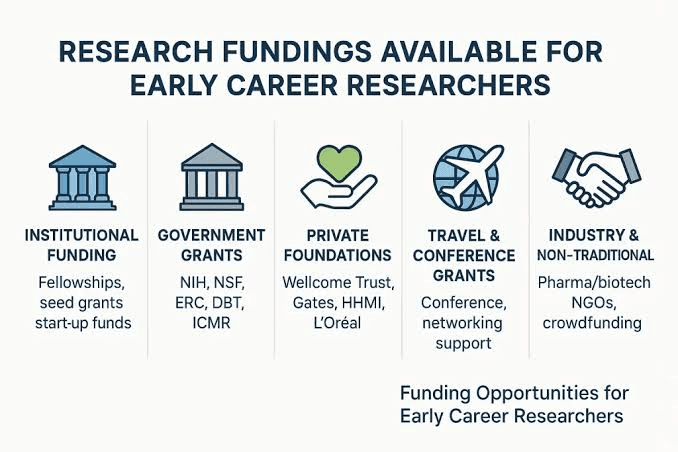
Corporate and nonprofit programs that fund student research
By
Princeton Journal of Pre-Collegiate Research
Read more

Science fair grants and material stipends explained
By
Princeton Journal of Pre-Collegiate Research
Read more

Crowdfunding a student research project: does it work
By
Princeton Journal of Pre-Collegiate Research
Read more

How much does a research project actually cost
By
Princeton Journal of Pre-Collegiate Research
Read more

How to ask your school to fund your project
By
Princeton Journal of Pre-Collegiate Research
Read more

Grants for high school research projects: what exists
By
Princeton Journal of Pre-Collegiate Research
Read more

How to start a research club at your school
By
Princeton Journal of Pre-Collegiate Research
Read more

How to organize a school research symposium
By
Princeton Journal of Pre-Collegiate Research
Read more

Turning a school club into a research pipeline
By
Princeton Journal of Pre-Collegiate Research
Read more

How to start a student research journal at your school
By
Princeton Journal of Pre-Collegiate Research
Read more

How to find a faculty sponsor for a research club
By
Princeton Journal of Pre-Collegiate Research
Read more

How to propose an independent study for research credit
By
Princeton Journal of Pre-Collegiate Research
Read more

Running a peer-review workshop at your school
By
Princeton Journal of Pre-Collegiate Research
Read more

How to get school funding for student research
By
Princeton Journal of Pre-Collegiate Research
Read more

How to do research as a team of students
By
Princeton Journal of Pre-Collegiate Research
Read more
Dividing work fairly in a group research project
By
Princeton Journal of Pre-Collegiate Research
Read more

Group research vs solo research: pros and cons
By
Princeton Journal of Pre-Collegiate Research
Read more

Resolving disagreements in group research
By
Princeton Journal of Pre-Collegiate Research
Read more
What to do when a co-author stops contributing
By
Princeton Journal of Pre-Collegiate Research
Read more