Resolving disagreements in group research
Princeton Journal of Pre-Collegiate Research

Resolving disagreements in group research: a practical guide for high school researchers
Collaborative research projects produce stronger work when teams develop explicit strategies for resolving disagreements before those disagreements derail the research itself. This guide is written for high school students and their mentors who are conducting original group research and want to manage methodological, interpretive, and authorship disputes in ways that preserve both the work and the working relationship. After reading, students will understand the most common conflict types in collaborative research, how professional researchers resolve them, and how to apply structured resolution frameworks to their own projects. When the work is complete, the Princeton Journal of Pre-Collegiate Research accepts original research from high school students across all academic disciplines.
Why does group research produce disagreements, and what makes them hard to resolve?
Disagreements in collaborative research are not a sign that a team is failing. They are a predictable consequence of combining different analytical perspectives, prior knowledge, and interpretive frameworks on a shared dataset or research question. The difficulty is that research disagreements often feel personal even when they are purely methodological, and teams without explicit resolution procedures tend to resolve them through social pressure rather than evidence, which consistently produces worse science.
Resolving disagreements in group research requires distinguishing between three distinct conflict types: methodological disputes (which statistical test to use, which control condition to include), interpretive disputes (what the results mean), and authorship or contribution disputes (who receives credit for which components). Each type requires a different resolution approach. Teams that treat all three as the same kind of problem routinely make the wrong decision on at least one of them.
A 2019 analysis published in PLOS ONE examining collaborative research practices found that authorship disputes were the single most commonly reported source of conflict among co-authored research teams, cited by 52% of respondents, while methodological disagreements were the most likely to go unresolved and to affect the final paper's quality. High school research teams face both categories, often without the institutional structures that university researchers use to manage them.
How do you resolve disagreements in group research effectively?
The most effective method for resolving disagreements in group research is to establish a written decision protocol before data collection begins. This protocol assigns specific resolution procedures to specific conflict types: evidence review for methodological disputes, structured deliberation with a designated tie-breaker for interpretive disputes, and a contribution log for authorship disputes. Teams that document this protocol at the project outset resolve conflicts in significantly less time than teams that address each dispute ad hoc.
Step 1: Classify the disagreement before attempting to resolve it
Before any discussion begins, every team member should independently write one sentence describing what they believe the disagreement is actually about. If those sentences describe different problems, the team is not yet ready to resolve anything. Misclassified disagreements are the primary reason that research teams spend significant time in discussion and still reach no resolution: two researchers arguing about what a result means cannot resolve that argument by debating which statistical test was appropriate, even if both issues are present in the same dataset.
Step 2: Apply the correct resolution procedure for each conflict type
Methodological disputes should be resolved by returning to the literature. If two team members disagree about whether a Pearson correlation or a Spearman rank correlation is appropriate for a given dataset, the answer is determined by the distribution of the data and the assumptions of each test, not by seniority or persuasiveness. Designate one team member to locate two peer-reviewed sources that specify the selection criteria, present those criteria to the group, and apply them to the actual data. The decision follows the evidence.
Interpretive disputes are more difficult because they involve genuine uncertainty. When two reasonable researchers look at the same results and reach different conclusions, both interpretations may be defensible. The appropriate resolution is not to choose one and discard the other but to test whether the data can distinguish between them. If it cannot, both interpretations should be acknowledged in the discussion section of the paper, with explicit notation of what additional evidence would be required to differentiate them. This is how professional researchers handle interpretive uncertainty, and reviewers at peer-reviewed journals consistently evaluate it as a mark of analytical maturity.
Authorship disputes require a contribution log that has been maintained throughout the project. The log should record, at minimum, who designed each component of the methodology, who collected each dataset, who conducted each analysis, and who drafted each section of the paper. Authorship order in most scientific disciplines reflects relative contribution, with the primary contributor listed first and the corresponding author listed last. Students preparing work for submission should review the authorship guidelines of their target journal before disputes arise, not after.
Step 3: Document every resolution decision in writing
Every resolved disagreement should be recorded in a shared project log with the date, the nature of the dispute, the resolution procedure applied, and the decision reached. This documentation serves three functions: it prevents the same dispute from recurring, it provides an audit trail if the decision is later questioned during peer review, and it creates a record that can be referenced if authorship contributions are disputed at the submission stage. For students planning to submit to a peer-reviewed journal, this log also demonstrates methodological rigor to reviewers who request clarification on analytical decisions.
What happens when a disagreement cannot be resolved within the team?
When a team reaches genuine impasse on a methodological or interpretive question, the appropriate next step is external consultation, not prolonged internal debate. This means presenting the specific question, not the interpersonal conflict, to a faculty mentor, a subject-matter expert, or a statistician who has no stake in the outcome. The consultation should be framed as a technical question: given these data characteristics, which approach is more defensible? The external party is not being asked to adjudicate between team members; they are being asked to evaluate a methodological question on its merits.
Students working without a formal faculty mentor can consult published methodological literature directly. For quantitative research, textbooks such as Field's Discovering Statistics Using IBM SPSS Statistics or the American Psychological Association's Publication Manual provide explicit guidance on analytical decision points that commonly generate team disagreements. For qualitative research, Lincoln and Guba's framework for trustworthiness criteria offers a structured basis for evaluating competing interpretive claims. Neither source requires institutional access; both are available through most public library systems.
If the impasse involves authorship, and internal discussion and external consultation have both failed to produce resolution, the team should consider whether the project can be restructured so that the disputed components are completed by a single author and acknowledged as such. Splitting a paper into two separate submissions, each with a clearly defined primary contributor, is preferable to submitting a paper with unresolved authorship disputes, which peer reviewers and journal editors are trained to identify. For guidance on how collaborative submissions are handled in practice, students can review the research goals and planning guidance available on the PJPCR blog, which addresses project structure decisions that affect submission readiness.
What are the most common mistakes students make when resolving disagreements in group research?
The most common mistakes in resolving disagreements in group research are deferring to seniority rather than evidence, conflating social harmony with scientific accuracy, and waiting until the writing stage to address disputes that originated during data collection.
Deferring to the most senior or most confident team member is the single most frequently observed error in student collaborative research. Seniority is not a methodological criterion. When a team accepts an analytical decision because one member argued for it most forcefully, rather than because the evidence supported it, the resulting paper carries that error through every subsequent section. Peer reviewers will identify it; it is one of the most common reasons methodologically sound student papers receive revision requests on their first submission.
Conflating social harmony with scientific accuracy produces papers where the discussion section presents a single, tidy interpretation of results that the data do not fully support, because acknowledging interpretive uncertainty felt like admitting the team had failed. Reviewers consistently penalise this. A discussion section that honestly acknowledges the limits of the data and the range of defensible interpretations demonstrates stronger analytical thinking than one that overstates certainty.
Waiting until the writing stage to resolve methodological disputes that arose during data collection is the third common error. By the writing stage, the data have already been collected and analysed using the disputed approach. Reversing that decision at the writing stage may require recollecting data or rerunning analyses, which is frequently not possible within a student project timeline. Methodological disputes must be resolved before data collection begins or, at the latest, before analysis proceeds.
How to apply a structured resolution framework to your group research project, step by step
Before data collection begins, hold a single team meeting dedicated to protocol design. Assign roles: one person maintains the contribution log, one person is designated to locate external sources when methodological disputes arise, and one person serves as the structured deliberation facilitator for interpretive disputes.
Create a shared written document that records the project's core methodological decisions, the rationale for each decision, and the sources consulted. This document is updated whenever a decision changes.
When a disagreement arises, pause the work. Each team member writes one sentence describing what the disagreement is about. Compare sentences before beginning any discussion.
Classify the disagreement as methodological, interpretive, or authorship-related. Apply the corresponding resolution procedure as described in the protocol established in step one.
Record the resolution in the project log within 24 hours. Include the date, the question, the procedure applied, and the decision reached.
If the team reaches impasse, bring the specific technical question, documented in writing, to an external consultant. Do not bring the interpersonal conflict. Bring the methodological question.
Before submission, review the contribution log and confirm that authorship order reflects actual contributions. Consult the target journal's authorship guidelines. For students submitting to a peer-reviewed student journal, review the APA formatting guide for high school research papers to ensure the final manuscript meets submission standards.
PJPCR publishes original research across all academic disciplines. If your collaborative work is complete and ready for peer review, review the submission guidelines at princeton-jpcr.org/submit.
Frequently asked questions about resolving disagreements in group research
What is the difference between a methodological disagreement and an interpretive disagreement in research?
A methodological disagreement concerns how the research was or should be conducted: which design, which instrument, which statistical test. An interpretive disagreement concerns what the results mean after the analysis is complete. Methodological disputes are resolved by consulting the literature and applying established criteria. Interpretive disputes may not have a single correct answer and are often best handled by acknowledging multiple defensible conclusions in the paper's discussion section.
How long does it typically take to resolve a research disagreement in a student team?
Teams with a written resolution protocol in place typically resolve methodological disputes within one to three days of identifying them, assuming the relevant literature is accessible. Interpretive disputes take longer, often one to two weeks, because they require testing whether the data can differentiate between competing conclusions. Authorship disputes that are addressed early, using a contribution log maintained throughout the project, are typically resolved in a single meeting. Teams without any protocol average significantly longer resolution times, according to collaborative research process literature.
Do I need a faculty mentor to resolve disagreements in a student research team?
A faculty mentor is not required to resolve most research disagreements. Methodological disputes can be resolved by returning to peer-reviewed literature. Interpretive disputes can be resolved through structured deliberation using the data itself as the arbiter. A mentor is most useful when the team has reached genuine impasse on a technical question and needs a subject-matter expert to evaluate the question on its merits. Mentors are not substitutes for a team decision protocol.
What makes a collaborative research paper publishable rather than just well-organised?
A publishable collaborative paper demonstrates that the team made defensible methodological decisions and can articulate the reasoning behind each one. Reviewers assess whether the analytical choices are appropriate for the research question, whether the discussion section accurately represents what the data show, and whether limitations are acknowledged honestly. A paper that reflects resolved rather than suppressed disagreements, where competing interpretations are acknowledged and the basis for the team's conclusions is explicit, consistently performs better in peer review than one that presents false certainty.
What kinds of collaborative research does PJPCR publish, and how does peer review work?
The Princeton Journal of Pre-Collegiate Research publishes original, peer-reviewed research by high school students across all academic disciplines, including collaborative multi-author submissions. Peer review is conducted by qualified reviewers who evaluate submissions on methodological rigor, originality, and analytical clarity. The standard review and publication timeline is 2 to 3 months. A fast-track option is available for students who need a quicker turnaround. Students can review the full peer review process and the submission guidelines on the journal's website.
What collaborative research teams should take away from this guide
Resolving disagreements in group research is a skill that can be learned and systematised. The three most important actions a team can take are: establishing a written decision protocol before data collection begins, classifying each disagreement correctly before attempting to resolve it, and documenting every resolution decision in a shared project log. Teams that treat disagreement as a methodological problem to be solved, rather than a social problem to be avoided, consistently produce stronger papers and more defensible conclusions.
When the research is complete and the manuscript is ready for external evaluation, students can explore published issues of student research to understand the standard of work that peer review produces, and then submit their own work for review. If your research is ready for peer review, submit it to PJPCR at princeton-jpcr.org/submit.
Read More

How to write a grant proposal as a student
By
Princeton Journal of Pre-Collegiate Research
Read more
Free resources that replace research funding
By
Princeton Journal of Pre-Collegiate Research
Read more
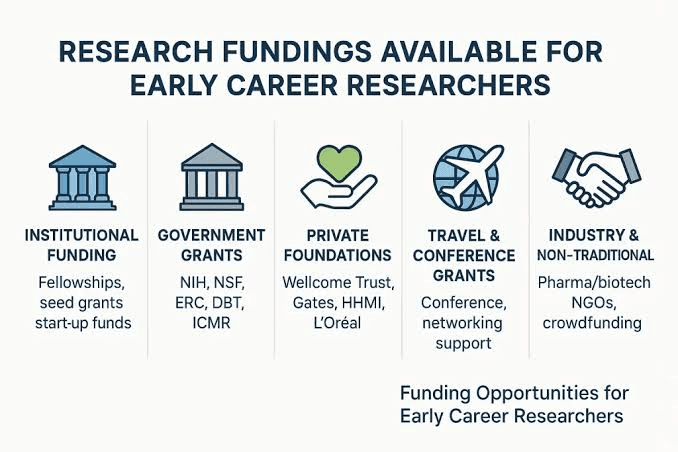
Corporate and nonprofit programs that fund student research
By
Princeton Journal of Pre-Collegiate Research
Read more

Science fair grants and material stipends explained
By
Princeton Journal of Pre-Collegiate Research
Read more

Crowdfunding a student research project: does it work
By
Princeton Journal of Pre-Collegiate Research
Read more

How much does a research project actually cost
By
Princeton Journal of Pre-Collegiate Research
Read more

How to ask your school to fund your project
By
Princeton Journal of Pre-Collegiate Research
Read more

Grants for high school research projects: what exists
By
Princeton Journal of Pre-Collegiate Research
Read more

How to start a research club at your school
By
Princeton Journal of Pre-Collegiate Research
Read more

How to organize a school research symposium
By
Princeton Journal of Pre-Collegiate Research
Read more

Turning a school club into a research pipeline
By
Princeton Journal of Pre-Collegiate Research
Read more

How to start a student research journal at your school
By
Princeton Journal of Pre-Collegiate Research
Read more

How to find a faculty sponsor for a research club
By
Princeton Journal of Pre-Collegiate Research
Read more

How to propose an independent study for research credit
By
Princeton Journal of Pre-Collegiate Research
Read more

Running a peer-review workshop at your school
By
Princeton Journal of Pre-Collegiate Research
Read more

How to get school funding for student research
By
Princeton Journal of Pre-Collegiate Research
Read more

How to do research as a team of students
By
Princeton Journal of Pre-Collegiate Research
Read more

Dividing work fairly in a group research project
By
Princeton Journal of Pre-Collegiate Research
Read more

Group research vs solo research: pros and cons
By
Princeton Journal of Pre-Collegiate Research
Read more
Resolving disagreements in group research
By
Princeton Journal of Pre-Collegiate Research
Read more
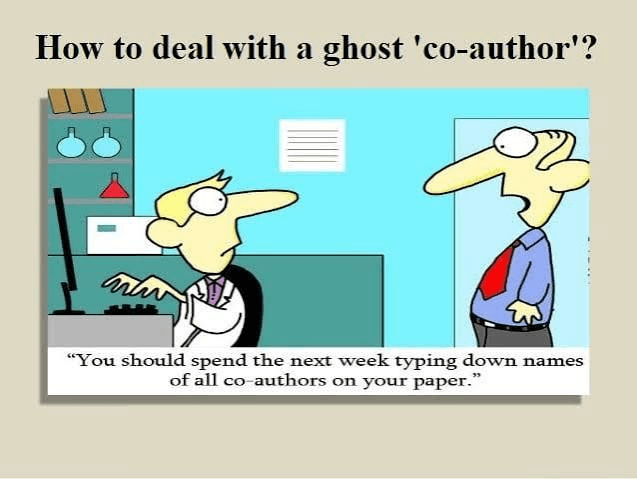
What to do when a co-author stops contributing
By
Princeton Journal of Pre-Collegiate Research
Read more