Intel ISEF vs Journal Publication: What Should You Do First?
Princeton Journal of Pre-Collegiate Research
This post answers a specific question that serious high school researchers face: should you pursue Intel ISEF or submit your research to a peer-reviewed journal first? It is written for students in grades 9 through 12 who have completed or nearly completed an original research project and need to decide where to take it next. After reading, you will understand exactly what each path offers, how they interact, and how to sequence them based on your research type and goals. If your work is ready for peer review, the Princeton Journal of Pre-Collegiate Research publishes original research across all academic disciplines.
Intel ISEF vs journal publication: what should you do first?
For most high school researchers, journal publication and Intel ISEF serve different purposes and are not mutually exclusive. ISEF rewards experimental science projects judged in person. Journal publication creates a permanent, citable record of your research available to anyone. The right sequence depends on your discipline, your timeline, and what you want your research to accomplish. Many students do both, in the right order.
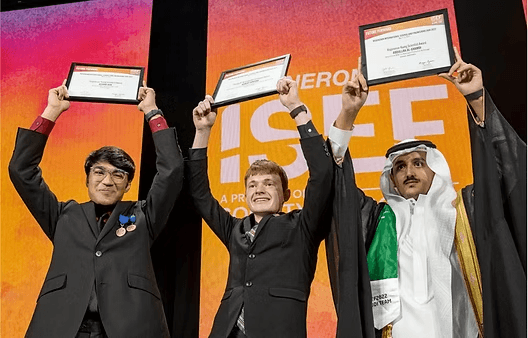
Intel ISEF (now regeneron ISEF) is the world's largest pre-college science competition. According to the Society for Science, which administers the competition, over 1,800 finalists from 49 countries compete each year. Projects are judged in person across roughly 20 STEM categories. Winning or placing at ISEF carries significant recognition, and the competition has historically been a strong signal of scientific aptitude for college admissions readers in STEM fields.
Journal publication works differently. A peer-reviewed journal evaluates your written paper, not a physical display or oral presentation. Reviewers assess your methodology, your argument, and your contribution to existing knowledge. A published paper earns a DOI (digital object identifier), which means it exists permanently in academic databases, findable by researchers anywhere in the world. It is a credential you can cite on a resume, a college application, or a graduate school application years from now.
The critical distinction is this: ISEF evaluates your project at a single moment in time. A published paper is a permanent record. These are not competing goals. They are complementary ones. But the sequence matters, and getting it wrong can cost you time and opportunity.
If your project is experimental science with original data, ISEF is typically the right first step. Judges respond to live demonstrations, physical models, and the ability to discuss your work in real time. Your paper can be refined and submitted to a journal after the competition cycle ends, incorporating any feedback judges gave you. That feedback often strengthens the written version considerably.
If your project is in the humanities, social sciences, computer science, or any non-experimental STEM field, ISEF is either not applicable or not the strongest venue. Journal publication is the primary credentialing path for these disciplines. Submitting to a peer-reviewed journal that accepts research across all academic disciplines, including the best high school research journals in your subject area, is the most direct route to a permanent, verifiable publication record.
For interdisciplinary or data-driven projects, both paths are viable. The standard review and publication timeline at most student journals is 2 to 3 months. ISEF's regional and state qualifying competitions run on an annual cycle, typically from October through spring. In most cases, you have enough time to pursue both without one blocking the other.
What does each path actually give you?
Understanding what ISEF and journal publication each produce, concretely, is the clearest way to decide which fits your situation. They are not interchangeable. Each creates a different type of credential, and each is valued differently depending on who is evaluating your work.
ISEF gives you competitive recognition. A top award at the international level is one of the most prestigious science honours a high school student can earn. Regional and state placements are also meaningful. The competition process itself, presenting to expert judges and defending your methodology under questioning, builds skills that no written submission replicates. If you are applying to STEM undergraduate programmes or planning to pursue research-intensive careers, ISEF placement is a strong differentiator. However, the recognition is largely contextual. It matters most to people who know what ISEF is. Outside of STEM admissions and science communities, it requires explanation.
Journal publication gives you a permanent, searchable record. A paper with a DOI can be found by anyone using Google Scholar, a university library database, or a standard web search. It does not expire. It does not require context to be understood. The credential reads clearly on any application: published author, peer-reviewed journal, named publication. For students in the humanities, social sciences, or interdisciplinary fields, it is often the only equivalent to what ISEF offers STEM students.
There is one more practical difference. ISEF requires your project to go through a qualifying process at the regional and state level before you reach the international competition. That process takes months and depends on your school and region having affiliated fairs. Journal submission has no geographic requirement. Any student with a completed paper can submit, regardless of school resources or location. If you are at a school without an active science fair programme, journal publication may be the more accessible path, even for experimental science projects. You can read more about journals that accept high school research without a mentor if institutional support is limited.
What are the most common mistakes students make when choosing between ISEF and journal publication?
The most common mistake is treating the two as competing options and choosing one while abandoning the other entirely. Students who do this often miss the stronger outcome: using ISEF competition feedback to improve a paper before journal submission, or using a published paper as supporting evidence of research depth during ISEF judging.
The second mistake is submitting to a journal before the research is complete. Peer reviewers evaluate finished work. A paper submitted with preliminary data, an incomplete literature review, or an underdeveloped methodology section will be desk-rejected before it reaches a reviewer. That rejection is not a reflection of your potential. It is a signal that the paper needs more time. The fix is to treat journal submission as a post-completion step, not a parallel one.
The third mistake is assuming ISEF is only for students at well-resourced schools. The Society for Science has actively worked to expand access to affiliated fairs. The ISEF Broadening Participation initiative specifically supports students from underrepresented communities and under-resourced schools. If you believe you are not eligible because of your school's resources, check the Society for Science's affiliated fair directory before concluding that ISEF is not available to you.
The fourth mistake is submitting the same paper to multiple journals simultaneously without checking each journal's submission policies. Most peer-reviewed journals, including student journals, require exclusive submission. Submitting to multiple journals at once and then withdrawing a paper after acceptance elsewhere wastes reviewer time and can affect your standing with those publications. Submit to one journal at a time. The standard review timeline of 2 to 3 months is worth respecting. If timeline is a genuine concern, some journals offer a fast-track option for students who need a quicker turnaround. You can find more detail on fastest high school research journals for publication if speed matters for your situation.
How to decide between Intel ISEF and journal publication, step by step
Identify your discipline. If your project is experimental science with original lab or field data, ISEF is a strong primary option. If it is in the humanities, social sciences, or non-experimental STEM, journal publication is the primary path.
Check ISEF eligibility in your region. Visit the Society for Science's website and confirm whether your school or region has an affiliated fair. If it does not, journal publication is your most accessible route to a credentialed outcome.
Assess your paper's completion status. If your research is fully written, with a complete methodology, results, and discussion section, it is ready for journal submission. If it is still in progress, finish it before submitting anywhere.
Decide on sequencing. If you are pursuing ISEF, plan to submit your journal paper after the competition cycle ends, incorporating judge feedback into the written version. If you are not pursuing ISEF, submit to a peer-reviewed journal as soon as your paper is complete.
Choose a journal that matches your discipline. Not every student journal accepts every subject area. Look for journals that publish across all academic disciplines, or find a subject-specific journal that fits your field. If you are unsure where your topic fits, review guidance on how to find a journal that accepts your research topic.
Prepare your submission carefully. Read the submission guidelines before you write the final version of your paper. Formatting errors and missing components are among the most common reasons for desk rejection.
Submit your research to PJPCR at princeton-jpcr.org if your work is complete and you are ready for peer review across any academic discipline.
PJPCR publishes original research across all academic disciplines. Submission and peer review are free. If your paper is accepted, a publication fee applies. If your work is ready for peer review, review the submission guidelines for free-to-submit high school research journals and consider PJPCR as your publication destination.
Frequently asked questions about Intel ISEF vs journal publication
What is the difference between Intel ISEF and a peer-reviewed journal?
Intel ISEF is a science competition where projects are judged in person by expert evaluators at a live event. A peer-reviewed journal is a publication that evaluates written research papers through a structured review process before publishing them. ISEF produces competitive awards. A journal produces a permanent, citable publication with a DOI.
How long does it take to get published in a high school research journal?
The standard review and publication timeline at most student journals is 2 to 3 months from submission to final decision. This includes initial screening, peer review, any revision rounds, and final acceptance. A fast-track option is available at some journals for students who need a quicker turnaround. PJPCR's standard timeline is 2 to 3 months, with a fast-track option available.
Do I need to have competed at ISEF before submitting to a journal?
No. Journal submission has no prerequisite competition history. Any student with completed original research can submit to a peer-reviewed journal regardless of whether they have participated in ISEF or any other competition. The two paths are independent. You can pursue one, the other, or both in whatever sequence fits your research and timeline.
What makes a high school research paper publishable in a peer-reviewed journal?
A publishable paper presents original research with a clear question, a defined methodology, results that follow from that methodology, and a discussion that connects the findings to existing literature. It is not a review of other people's work. It is not a class essay. The research must be the student's own, and the paper must be written to academic standards, including proper citations and a complete abstract.
What kinds of research does PJPCR publish?
The Princeton Journal of Pre-Collegiate Research publishes original research by high school students across all academic disciplines, including STEM, humanities, social sciences, and interdisciplinary fields. Every submission goes through double-blind peer review. The journal is open access, meaning published papers are freely available to the public. It is an independent, student-founded journal and is not affiliated with Princeton University.
The bottom line
Intel ISEF and journal publication are not competing choices. They are two different types of credential that serve different purposes and different audiences. ISEF is the right primary path for experimental science students with access to an affiliated fair. Journal publication is the right primary path for students in the humanities, social sciences, and non-experimental fields, and it is a strong secondary path for ISEF competitors who want a permanent record of their work. The most important thing is to finish your research before submitting it anywhere. A complete, well-written paper is the foundation for both paths. If your research is ready for peer review, submit it to PJPCR at princeton-jpcr.org/submit.
Read More

APA format for high school research papers: complete guide
By
RISE Research
Read more

MLA format for research papers: when and how
By
RISE Research
Read more

APA vs MLA vs Chicago: which to use for your paper
By
RISE Research
Read more

How to cite a dataset
By
RISE Research
Read more

In-text citations vs footnotes: how each works
By
RISE Research
Read more

What is a p-value, explained for high school researchers
By
RISE Research
Read more

What is regression analysis and when do you use it
By
RISE Research
Read more

What is standard deviation and why it matters
By
RISE Research
Read more

What is a t-test and when do you need one
By
RISE Research
Read more

What is effect size and why reviewers care
By
RISE Research
Read more

Common statistical mistakes in student papers
By
RISE Research
Read more

Research for biology majors: what to publish before applying
By
https://princeton-jpcr.org/
Read more

Research for economics majors
By
https://princeton-jpcr.org/
Read more

Research for political science majors
By
https://princeton-jpcr.org/
Read more

Research for English and humanities majors
By
https://princeton-jpcr.org/
Read more

Research for neuroscience majors
By
https://princeton-jpcr.org/
Read more

Undecided major: what research keeps your options open
By
https://princeton-jpcr.org/
Read more

Summer research timeline: June to August week by week
By
Princeton Journal of Pre-Collegiate Research
Read more

Research goals to set at the start of the school year
By
Princeton Journal of Pre-Collegiate Research
Read more

How to finish your research paper before finals season
By
Princeton Journal of Pre-Collegiate Research
Read more

New year research resolutions that actually stick
By
Princeton Journal of Pre-Collegiate Research
Read more