How to propose an independent study for research credit
Princeton Journal of Pre-Collegiate Research

How to propose an independent study for research credit
Most high school students who want to pursue original research do not realize that their school may already have a formal mechanism to support it. An independent study for research credit allows a student to design and execute an original research project under faculty supervision, earning academic credit in the process. This post explains exactly how to propose an independent study for research credit, what schools typically require, and how to structure a proposal that administrators will approve. It is written for students in grades 9 through 12 who have a research idea and want institutional support to pursue it. Students whose work reaches the publication stage may consider submitting to the Princeton Journal of Pre-Collegiate Research, a peer-reviewed journal that publishes original research by pre-collegiate students across all academic disciplines.
How do you propose an independent study for research credit?
To propose an independent study for research credit, a student submits a written proposal to a supervising teacher and school administrator that defines the research question, methodology, deliverables, credit equivalency, and supervision schedule. Most schools require this proposal in writing before the term begins. The proposal typically runs two to four pages and must demonstrate that the project meets the academic rigor of the course credit being requested.
The process varies by school, but the core sequence is consistent across most institutions. The following steps reflect standard practice at secondary schools that offer independent study as a formal academic option.
Identify the research question first. Before approaching any administrator, the student should have a clearly defined question that is original, answerable within the available time and resources, and connected to a recognizable academic discipline. A question such as "How does soil nitrogen concentration affect the germination rate of Phaseolus vulgaris under controlled light conditions?" is specific, testable, and discipline-anchored. A question such as "What is the effect of social media on teenagers?" is too broad to anchor a rigorous independent study proposal.
Identify a faculty supervisor. Most schools require a credentialed teacher to supervise the independent study. The student should approach a teacher in the relevant subject area before submitting any paperwork. The supervisor's name, department, and agreed meeting schedule must appear in the proposal. A supervisor who has agreed in advance is far more persuasive to an administrator than a proposal that names a teacher without prior confirmation.
Obtain and review the school's independent study policy. Many schools have a formal policy document that specifies minimum hours of student work per credit, required deliverables, grading criteria, and approval authority. This document is usually available from the registrar or guidance office. Proposals that align precisely with the school's existing policy language are approved faster than those that ignore it.
Write the proposal document. A complete proposal includes: the research question and its academic context, the methodology the student will use, a week-by-week timeline, the deliverables at the end of the term (such as a written paper, a presentation, or a data report), the name and contact information of the faculty supervisor, and the credit equivalency being requested. Each section should be written in formal academic prose, not informal language.
Submit the proposal through the correct administrative channel. Depending on the school, approval may rest with a department chair, the principal, or a curriculum committee. The student should confirm the approval pathway before submitting and allow at least two to three weeks for a decision before the term registration deadline.
Revise if requested. Administrators frequently return proposals with requests for greater specificity in the methodology or timeline sections. This is not a rejection. A student who responds promptly with a revised document demonstrates exactly the kind of intellectual seriousness that independent study is designed to cultivate.
Begin the project only after written approval is confirmed. Work completed before formal approval is rarely retroactively credited. The student should obtain written confirmation of approval and keep a copy for their records.
What makes an independent study proposal strong enough to be approved?
The most common reason independent study proposals are denied is not that the research idea is weak. It is that the proposal does not demonstrate how the student will be supervised, assessed, and held accountable for a defined body of work. Administrators approving independent study credit are making an institutional commitment. They need evidence that the project will produce a verifiable academic outcome, not simply that the student is interested in a topic.
A strong proposal answers three questions that administrators always ask, even when they do not state them explicitly. First: what will the student actually produce? A proposal that ends with "a research paper" is less persuasive than one that specifies "a 3,000-word empirical paper with a literature review, a methods section, and a results section, formatted according to APA guidelines." Specificity signals preparation. For guidance on formatting research papers correctly, the post on APA format for high school research papers covers the standard requirements in detail.
Second: how will the student be supervised? A proposal should name specific meeting dates or a recurring schedule, such as "biweekly 30-minute check-ins with the supervising teacher every other Thursday." Vague supervision language, such as "meetings as needed," raises administrative concern about whether oversight will actually occur.
Third: how will the work be graded? The proposal should propose a grading rubric or at minimum identify the criteria by which the final deliverable will be evaluated. Some schools have a standard rubric for independent study; if so, the proposal should reference it explicitly. If no standard rubric exists, the student should draft one in consultation with the supervising teacher and include it as an appendix to the proposal.
Students who have designed a survey instrument or a structured data-collection protocol as part of their methodology will find that including a draft of these instruments in the proposal appendix significantly strengthens the case for approval. A student who can show that they have already thought through the mechanics of data collection is demonstrating readiness that most proposals do not achieve.
What are the most common mistakes students make when proposing an independent study?
The four mistakes below account for the majority of independent study proposals that are either denied or returned for substantial revision. Each is avoidable with preparation.
The first mistake is proposing a topic rather than a question. "I want to study climate change" is a topic. "I want to investigate whether mean summer temperatures in my county, as recorded by NOAA weather stations from 2000 to 2023, show a statistically significant upward trend" is a research question. Administrators and faculty supervisors are trained to evaluate research questions, not topics. A proposal built around a topic will be returned.
The second mistake is approaching the supervisor after submitting the proposal. The supervisor's agreement must come first. A proposal that names a teacher who has not yet been consulted creates an awkward administrative situation and signals that the student did not plan the process carefully.
The third mistake is underestimating the time requirement. According to the Carnegie Unit standard used by most U.S. accreditation bodies, one academic credit requires approximately 120 hours of instructional or equivalent student work. A student proposing a one-credit independent study should account for this in the timeline. A proposal that describes eight hours of total work per week over a 15-week semester accounts for 120 hours and is credible. A proposal that describes two hours per week is not.
The fourth mistake is failing to address what happens if the research does not produce the expected results. Null results are a legitimate scientific outcome. A proposal that acknowledges this and specifies how the student will document and interpret negative findings demonstrates genuine scientific literacy. Proposals that assume success are less credible than those that account for uncertainty.
How to propose an independent study for research credit, step by step
Define a specific, testable research question in a recognized academic discipline.
Identify and confirm a faculty supervisor before writing the proposal.
Obtain the school's independent study policy document from the registrar or guidance office.
Draft the proposal with these six sections: research question and context, methodology, week-by-week timeline, deliverables, supervision schedule, and grading criteria.
Include a draft data-collection instrument or protocol as an appendix if the study involves primary data collection. For guidance on designing a data-collection instrument, the post on how to design a survey for a research study provides a practical framework.
Submit the proposal through the correct administrative channel with at least two to three weeks before the registration deadline.
Respond to any revision requests within one week to maintain momentum in the approval process.
Once the project is complete and the paper is written, consider whether the work meets the standard for peer-reviewed publication. Students whose independent study produces original empirical findings may review the submission guidelines at PJPCR to assess whether their work is ready for external peer review.
PJPCR publishes original research across all academic disciplines. If your independent study has produced a complete research paper, review the submission guidelines at princeton-jpcr.org/submit to determine whether your work is ready for peer review.
Frequently asked questions about proposing an independent study for research credit
What is an independent study in high school?
An independent study in high school is a formal academic arrangement in which a student designs and completes a self-directed project under the supervision of a credentialed teacher, earning course credit upon successful completion. It differs from a standard class in that the student sets the research question, methodology, and pace, subject to faculty oversight and institutional approval.
Independent study is typically available to students in grades 10 through 12, though some schools extend access to ninth graders. The credit earned is usually equivalent to an elective course and appears on the student's transcript as such. Schools that offer this option generally require a formal written proposal before the term begins.
How long does it take to complete an independent study for research credit?
Most independent study courses run for one academic semester, typically 15 to 18 weeks, and require approximately 120 hours of student work to earn one credit, consistent with the Carnegie Unit standard used by U.S. accreditation bodies. Some schools offer year-long independent study options for students pursuing more complex projects.
The timeline for completing the research itself depends on the methodology. Survey-based studies can collect data within four to six weeks. Experimental studies requiring repeated observation cycles may need the full semester. Students should build a realistic week-by-week timeline into the proposal and share it with the supervising teacher before submission. For projects involving sample size calculations, the post on how to calculate sample size for a student research study provides a practical starting point.
Do I need a mentor outside my school to propose an independent study?
No. An independent study for research credit requires only a credentialed faculty supervisor at the student's school. An external mentor, such as a university professor or industry professional, is not required by most school policies, though some students choose to involve one as an additional resource. If an external advisor does contribute substantively to the research, their role should be acknowledged properly in the final paper.
Students who do work with an external advisor should review guidance on how to credit a research mentor or advisor properly to ensure that acknowledgment and authorship are handled correctly in any written output.
What makes an independent study research paper publishable?
A publishable independent study paper presents a clearly defined original question, a methodology that is appropriate to that question, results that are reported accurately including null or unexpected findings, and a discussion that situates the results within existing literature. The paper must demonstrate that the student engaged with prior research, not simply that they collected data.
The distinction between a strong class paper and a publishable research paper lies in the literature review and the methodology section. A class paper summarizes existing knowledge. A publishable paper identifies a gap in that knowledge and designs a study to address it. Students who are uncertain whether their independent study paper meets this standard should read through the published issues of PJPCR to compare their work against papers that have passed peer review.
What kinds of research does PJPCR publish, and is it peer reviewed?
PJPCR publishes original, peer-reviewed research by pre-collegiate students across all academic disciplines, including the natural sciences, social sciences, humanities, mathematics, and interdisciplinary fields. Submission and peer review are free. A publication fee applies for accepted papers. The standard review and publication timeline is 2 to 3 months. A fast-track option is available for students who need a quicker turnaround.
All submissions undergo formal peer review by qualified reviewers. Acceptance is not guaranteed; the journal is selective and evaluates each submission on the originality of the research question, the rigor of the methodology, and the quality of the written analysis. Students who want to understand what the review process involves before submitting should review the peer review process page before preparing their manuscript.
What to do next
Proposing an independent study for research credit requires three things done in the right order: a specific research question, a confirmed faculty supervisor, and a written proposal that addresses methodology, timeline, deliverables, supervision, and grading. The most common reason proposals fail is not that the research idea is weak but that the proposal does not demonstrate readiness for institutional accountability. A student who submits a complete, specific proposal through the correct administrative channel, with the supervisor already confirmed, is in a strong position for approval.
When the research is complete and the paper is written, the next step is external peer review. If your independent study has produced original findings, submit your research to PJPCR at princeton-jpcr.org/submit to have your work evaluated by qualified peer reviewers and considered for open-access publication.
Read More

How to write a grant proposal as a student
By
Princeton Journal of Pre-Collegiate Research
Read more
Free resources that replace research funding
By
Princeton Journal of Pre-Collegiate Research
Read more
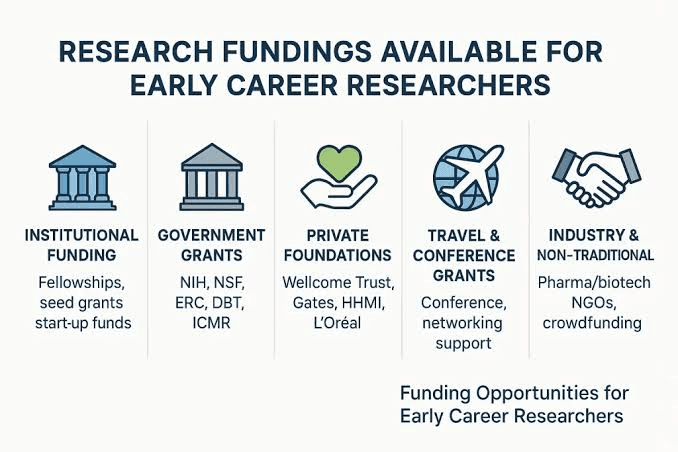
Corporate and nonprofit programs that fund student research
By
Princeton Journal of Pre-Collegiate Research
Read more

Science fair grants and material stipends explained
By
Princeton Journal of Pre-Collegiate Research
Read more

Crowdfunding a student research project: does it work
By
Princeton Journal of Pre-Collegiate Research
Read more

How much does a research project actually cost
By
Princeton Journal of Pre-Collegiate Research
Read more

How to ask your school to fund your project
By
Princeton Journal of Pre-Collegiate Research
Read more

Grants for high school research projects: what exists
By
Princeton Journal of Pre-Collegiate Research
Read more

How to start a research club at your school
By
Princeton Journal of Pre-Collegiate Research
Read more

How to organize a school research symposium
By
Princeton Journal of Pre-Collegiate Research
Read more

Turning a school club into a research pipeline
By
Princeton Journal of Pre-Collegiate Research
Read more

How to start a student research journal at your school
By
Princeton Journal of Pre-Collegiate Research
Read more

How to find a faculty sponsor for a research club
By
Princeton Journal of Pre-Collegiate Research
Read more
How to propose an independent study for research credit
By
Princeton Journal of Pre-Collegiate Research
Read more

Running a peer-review workshop at your school
By
Princeton Journal of Pre-Collegiate Research
Read more

How to get school funding for student research
By
Princeton Journal of Pre-Collegiate Research
Read more

How to do research as a team of students
By
Princeton Journal of Pre-Collegiate Research
Read more

Dividing work fairly in a group research project
By
Princeton Journal of Pre-Collegiate Research
Read more

Group research vs solo research: pros and cons
By
Princeton Journal of Pre-Collegiate Research
Read more

Resolving disagreements in group research
By
Princeton Journal of Pre-Collegiate Research
Read more

What to do when a co-author stops contributing
By
Princeton Journal of Pre-Collegiate Research
Read more