How to organize a school research symposium
Princeton Journal of Pre-Collegiate Research

How to organize a school research symposium: a complete guide for educators and students
This post answers the specific question of how to organize a school research symposium from the ground up. It is written for educators, student organizers, and research program coordinators at the secondary level who want to plan a credible, academically rigorous event. After reading, you will be able to build a timeline, structure judging criteria, prepare student presenters, and connect the symposium to formal publication pathways. Students whose work is ready for peer review after the event may submit their research to the Princeton Journal of Pre-Collegiate Research, an open-access journal publishing original high school research across all disciplines.
What is a school research symposium and why does it matter?
A school research symposium is a structured academic event in which students present original research to an audience of peers, educators, and external evaluators through oral presentations, poster sessions, or both. Unlike a science fair, a symposium emphasizes the communication of methodology and argumentation rather than a competitive display of a finished product. The distinction matters because it shapes every planning decision, from how judging rubrics are written to how students are coached to present.
Research symposiums serve a function that classroom assignments cannot replicate. When students are required to defend their methodology to a reviewer who has read their abstract in advance, they develop a qualitatively different relationship with their own work. The National Science Teaching Association has documented that science communication practice improves students' ability to identify weaknesses in their own research designs, a finding consistent with what research mentors observe anecdotally across pre-collegiate programs.
For educators supervising students who have conducted original research, the symposium also creates a natural bridge to formal publication. Students who have presented and received structured feedback are substantially better prepared to revise their manuscripts to a publishable standard than students who submit without that intermediate step.
How do you organize a school research symposium step by step?
Organizing a school research symposium requires six to ten weeks of preparation, a defined submission and review process for student abstracts, trained judges with discipline-specific expertise, and a structured presentation format. The core components are: abstract submission, judge recruitment, schedule construction, presentation format selection, evaluation rubric design, and post-event publication guidance.
Step 1: Define the scope and format of the symposium
Before any logistics are addressed, the organizing committee must decide whether the event will include oral presentations, poster sessions, or both. Poster sessions accommodate more students and allow judges to move between presenters, making them better suited to larger cohorts. Oral sessions allow for deeper engagement with methodology but require more time per presenter. Many school symposiums run a poster session in the morning and reserve oral slots for a smaller number of selected papers in the afternoon.
The scope decision also determines which disciplines are included. A school-wide symposium that accepts submissions across the sciences, social sciences, and humanities requires judges with correspondingly broad expertise. A STEM-focused symposium is easier to judge consistently but excludes students whose strongest work is in economics, political science, or psychology. For guidance on what original research looks like across these disciplines at the high school level, the posts on research for economics students and political science research at the high school level provide useful framing for coordinators building interdisciplinary judging panels.
Step 2: Build a realistic timeline working backward from the event date
A six-week minimum timeline is recommended for a first-year symposium. The sequence should follow this order:
Week 1: Announce the symposium, distribute abstract submission guidelines, and open the submission portal or intake form.
Week 2-3: Abstract submission window closes. Organizing committee reviews submissions for completeness and minimum quality threshold.
Week 3-4: Recruit and confirm judges. Assign abstracts to judges by discipline. Send judges the evaluation rubric and presentation schedule.
Week 4-5: Notify accepted students. Distribute presentation guidelines, poster specifications, and slide deck templates if applicable.
Week 5-6: Run a dry-run session where students present to a teacher or peer reviewer for structured feedback before the event.
Event day: Execute the schedule with 15-minute buffer windows between sessions to accommodate overruns.
Step 3: Write an abstract submission requirement that filters for genuine research
The abstract requirement is the single most important quality filter in the entire process. A well-designed abstract submission form asks students to state their research question, describe their methodology in at least two sentences, summarize their findings, and identify the limitations of their study. Any submission that cannot answer all four prompts in 250 words or fewer is not yet ready for a research symposium and should receive a developmental rejection with specific feedback.
Students who are unfamiliar with abstract writing conventions will benefit from reviewing the guide on APA format for high school research papers, which covers the structural requirements that apply to both submitted abstracts and formal journal manuscripts.
Step 4: Recruit judges with relevant disciplinary expertise
Judges should hold at minimum an undergraduate degree in a field related to the papers they are evaluating. Graduate students, university faculty, industry professionals, and educators with research backgrounds are all appropriate. A judge who cannot assess whether a statistical claim is valid, for example, should not be assigned to evaluate a quantitative social science paper. Where a school has limited access to external experts, connecting with local university departments or reaching out through professional networks established at events like regional science fairs can expand the pool significantly. The post on networking at science fairs and research symposiums outlines strategies that apply equally well to judge recruitment.
Step 5: Design an evaluation rubric that rewards methodological rigor
The rubric is where the symposium's academic standards are made explicit. A rubric that rewards only presentation polish will produce students who are skilled communicators but poor researchers. The rubric should weight the following categories: clarity of the research question (20%), appropriateness and rigor of the methodology (30%), accuracy and completeness of the results section (25%), quality of the discussion and limitations (15%), and presentation clarity (10%). These weightings signal to students that the research design matters more than the slide design.
What separates a strong student presentation from a weak one at a research symposium?
The most consistent failure mode in student symposium presentations is the inability to explain why the methodology chosen was appropriate for the research question asked. Students frequently describe what they did without being able to defend why they did it that way. A student who conducted a survey study, for example, should be able to explain why a survey was the correct instrument for their research question rather than an experiment or a secondary data analysis. Judges at well-run symposiums probe this directly, and students who cannot answer are revealing a gap in their understanding of their own research that no amount of polished slides can conceal.
A second common weakness is the conflation of correlation and causation in the results section. This is particularly prevalent in social science and behavioral research papers. Students who have collected data showing that two variables move together frequently describe this as evidence that one causes the other, which is a methodological error that should be flagged during the dry-run session well before the event. The post on understanding p-values for high school researchers provides a clear framework for helping students interpret their own statistical results accurately before they present them to judges.
The third weakness is an absent or superficial limitations section. Students who present their research as definitive rather than as a contribution to an ongoing inquiry signal to experienced reviewers that they have not yet internalized the norms of scientific discourse. Coaching students to identify and articulate at least two genuine limitations of their study, and to explain what future research would address those limitations, substantially improves the credibility of their presentations.
What are the most common mistakes in planning a school research symposium?
The most common planning mistake is recruiting judges after the abstract submission window closes, which compresses the time available to match judges to papers by discipline and leaves judges insufficient time to read submissions in advance. Judges who arrive at a symposium without having read the abstracts they are evaluating cannot ask meaningful methodological questions, which reduces the event to a presentation competition rather than a genuine academic exchange. Judge recruitment should begin no later than one week after the submission window opens.
The second mistake is failing to provide students with the evaluation rubric before the event. When students do not know how they will be assessed, they optimize for what they assume judges value, which is usually visual presentation quality. Sharing the rubric at the time of acceptance notification gives students three to four weeks to revise their presentations with the correct priorities in mind.
The third mistake is treating the symposium as the endpoint of the research process rather than as a milestone within it. Students who receive substantive feedback from judges during a symposium are in an excellent position to revise their manuscripts for formal publication. Organizers who do not build a post-symposium publication pathway into the event design leave this value unrealized. Students whose research meets the standard for original contribution should be directed toward formal peer review as a next step.
How to organize a school research symposium: a step-by-step checklist for coordinators
Set the event date and confirm venue availability at least eight weeks in advance.
Define the scope: disciplines included, presentation formats accepted, and maximum number of presenters.
Draft and distribute the abstract submission form with explicit word limits and required structural components.
Open the submission window for two to three weeks and send one reminder at the midpoint.
Review submissions against a minimum quality threshold and issue acceptances with the evaluation rubric attached.
Recruit judges with relevant disciplinary expertise and assign abstracts by field no later than three weeks before the event.
Run a mandatory dry-run session one to two weeks before the event where students present to a teacher or peer reviewer.
Execute the event with a schedule that includes buffer time and a structured Q&A period for each presenter.
Collect judge feedback forms and distribute written feedback to every presenter within one week of the event.
Direct students with publication-ready research to submit their manuscripts for peer review through the submission guidelines at princeton-jpcr.org/submit.
Students whose work is ready for formal review may submit to PJPCR at any time. Submission and peer review are free. A publication fee applies for accepted papers. A fast-track option is available for students who need a quicker turnaround than the standard 2-3 month review timeline.
Frequently asked questions about how to organize a school research symposium
What is a school research symposium?
A school research symposium is a structured academic event where students present original research to an audience of peers, educators, and qualified judges through poster sessions, oral presentations, or both. Unlike a science fair, a symposium evaluates the quality of the research process and methodology rather than the novelty of a finished invention or product. The format is modeled on professional academic conferences and is increasingly used at the secondary level to prepare students for university-level research culture.
How long does it take to plan a school research symposium?
A minimum of six weeks is required for a first-year symposium, though eight to ten weeks is recommended to allow adequate time for abstract review, judge recruitment, and student preparation. The timeline should work backward from the event date, with the abstract submission window closing no later than four weeks before the event. Schools running annual symposiums typically begin planning in the first month of the academic year. For goal-setting frameworks that apply to this kind of long-range planning, the post on research goals to set at the start of the school year provides a useful structure.
Do students need a faculty mentor to participate in a school research symposium?
Students do not need a formal faculty mentor to participate in a school research symposium, though access to a knowledgeable reviewer before the event substantially improves presentation quality. Many students conducting independent research without institutional lab access have produced symposium-ready work through secondary data analysis, systematic literature reviews, or field-based observational studies. The post on research for students at schools without science labs outlines methodologies that are accessible without university resources.
What makes a student research presentation strong enough to be publishable?
A presentation that is strong enough to be publishable demonstrates a clearly stated research question, a methodology that is appropriate and consistently applied, results that are reported accurately without overclaiming, and a discussion that situates the findings within existing literature while acknowledging limitations. The ability to answer methodological questions from judges without referring to notes is a reliable indicator that the student understands their own research at the level required for peer review. Surface-level polish in slides or speaking style does not compensate for gaps in methodological understanding.
What kinds of research does PJPCR publish, and is it peer reviewed?
PJPCR publishes original research by pre-collegiate students across all academic disciplines, including the sciences, social sciences, humanities, and interdisciplinary fields. All submissions undergo a formal peer review process conducted by qualified reviewers. The journal does not guarantee acceptance; selectivity is a core feature of its credibility. Students may browse published issues to assess the standard of work currently in print before submitting their own manuscripts.
Conclusion
Organizing a school research symposium well requires three things done in the correct order: a rigorous abstract submission process that filters for genuine research, judges recruited early enough to read submissions in advance, and a rubric that weights methodological quality above presentation aesthetics. Students who present at a well-run symposium and receive substantive feedback are meaningfully better positioned to revise their work to a publishable standard than students who submit cold to a journal without that intermediate step.
The symposium is most valuable when it functions as a milestone rather than an endpoint. Students whose work holds up under judge scrutiny should be encouraged to pursue formal peer review as the next stage of their research development. If your students' research is ready for that step, direct them to submit their manuscripts through the submission guidelines at princeton-jpcr.org/submit.
Read More

How to write a grant proposal as a student
By
Princeton Journal of Pre-Collegiate Research
Read more

Free resources that replace research funding
By
Princeton Journal of Pre-Collegiate Research
Read more
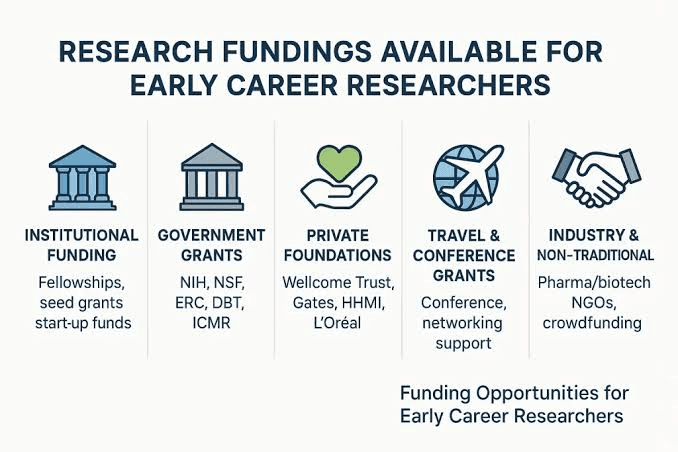
Corporate and nonprofit programs that fund student research
By
Princeton Journal of Pre-Collegiate Research
Read more

Science fair grants and material stipends explained
By
Princeton Journal of Pre-Collegiate Research
Read more

Crowdfunding a student research project: does it work
By
Princeton Journal of Pre-Collegiate Research
Read more

How much does a research project actually cost
By
Princeton Journal of Pre-Collegiate Research
Read more

How to ask your school to fund your project
By
Princeton Journal of Pre-Collegiate Research
Read more

Grants for high school research projects: what exists
By
Princeton Journal of Pre-Collegiate Research
Read more

How to start a research club at your school
By
Princeton Journal of Pre-Collegiate Research
Read more
How to organize a school research symposium
By
Princeton Journal of Pre-Collegiate Research
Read more

Turning a school club into a research pipeline
By
Princeton Journal of Pre-Collegiate Research
Read more

How to start a student research journal at your school
By
Princeton Journal of Pre-Collegiate Research
Read more

How to find a faculty sponsor for a research club
By
Princeton Journal of Pre-Collegiate Research
Read more

How to propose an independent study for research credit
By
Princeton Journal of Pre-Collegiate Research
Read more

Running a peer-review workshop at your school
By
Princeton Journal of Pre-Collegiate Research
Read more

How to get school funding for student research
By
Princeton Journal of Pre-Collegiate Research
Read more

How to do research as a team of students
By
Princeton Journal of Pre-Collegiate Research
Read more

Dividing work fairly in a group research project
By
Princeton Journal of Pre-Collegiate Research
Read more

Group research vs solo research: pros and cons
By
Princeton Journal of Pre-Collegiate Research
Read more

Resolving disagreements in group research
By
Princeton Journal of Pre-Collegiate Research
Read more

What to do when a co-author stops contributing
By
Princeton Journal of Pre-Collegiate Research
Read more