How to List Published Papers on Your Resume in High School
Princeton Journal of Pre-Collegiate Research
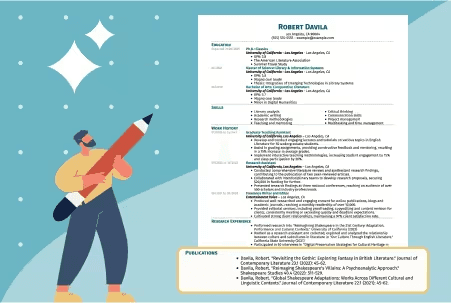
TL;DR: This post answers exactly how to list published papers on your resume as a high school student, including where to place them, what information to include, and how to format the entry correctly. It is written for students in grades 9 through 12 who have completed original research and want to represent it accurately on a resume or CV. After reading, you will know the precise format to use, what to do if your paper is under review, and how to avoid the credibility mistakes that reviewers notice immediately. If your research is ready for peer review, the Princeton Journal of Pre-Collegiate Research is an open-access, peer-reviewed journal that publishes original work by high school students across all disciplines.
Why listing a published paper correctly matters more than you think
Most high school students who have published research undersell it on their resume. They bury it under extracurriculars or list it without the information that makes it verifiable. A published paper listed without a DOI, journal name, or publication date looks like a self-report. A published paper listed correctly, with full citation details, is independently verifiable by any reader in under 30 seconds. That difference matters to admissions readers, scholarship committees, and research mentors who know what to look for.
Knowing how to list published papers on your resume in high school is not just a formatting question. It is a credibility question. The format signals whether you understand academic publishing norms, and that signal matters in contexts where the reader is evaluating your research maturity.
How do you list a published paper on a high school resume?
List a published paper in a dedicated "Publications" or "Research" section of your resume. Include: your name (and co-authors if applicable), the paper title in quotation marks, the journal name in italics, the volume and issue number, the year of publication, and the DOI or URL. This format mirrors standard academic citation style and makes the entry independently verifiable.
Here is the recommended format for a published paper entry:
Create a dedicated section. Label it "Publications" if you have a peer-reviewed, published paper. Label it "Research" if your paper is under review or accepted but not yet published. Do not mix publications with extracurricular activities or awards.
List your name first. Use the same name that appears on the published paper. If you have co-authors, list them in the order they appear in the publication. Do not omit co-authors.
Include the paper title. Use the exact title as published. Place it in quotation marks. Do not paraphrase or shorten it.
Name the journal. Write the full journal name in italics. Abbreviations are acceptable only if they are the journal's official abbreviated name.
Add the volume, issue, and year. For example: Vol. 3, No. 1 (2024). If the paper is published online ahead of print, note the year of online publication.
Include the DOI or URL. A DOI (Digital Object Identifier) is the gold standard. If your journal assigned a DOI, include it. If not, include the direct URL to the published paper. This is what makes the entry verifiable.
A complete entry looks like this:
Patel, A. "The Effect of Microplastic Concentration on Daphnia magna Reproduction Rates." Princeton Journal of Pre-Collegiate Research, Vol. 2, No. 1 (2024). doi:10.xxxxx/xxxxx
This format works for a standard one-page resume and for a longer academic CV. The key principle is that every element serves a purpose: the author list establishes authorship, the title identifies the work, the journal name establishes the publication venue, and the DOI makes it checkable.
If you need to understand the peer review process your paper went through before listing it, the guide on what peer review means for high school journals explains what that credential actually represents.
What should you do if your paper is under review but not yet published?
If your paper has been submitted but not yet accepted, you can list it as "under review" with the journal name. Do not imply it has been accepted. Do not omit the journal name. The entry signals that you have completed a submission-ready manuscript and initiated a formal review process, which is itself a meaningful credential.
There is a meaningful difference between three statuses, and your resume must reflect the correct one:
Published: The paper has completed peer review, been accepted, and is publicly accessible. Use the full citation format described above. Include the DOI.
Accepted, awaiting publication: The paper has been accepted after peer review but has not yet appeared in a published issue. Write: "Accepted for publication in [Journal Name], [Year]." Do not include a DOI yet if one has not been assigned.
Under review: The paper has been submitted and is currently in the peer review process. Write: "[Paper Title]. Submitted to [Journal Name], under review." This is honest and accurate. It does not overstate the credential.
Misrepresenting the status of a paper, listing "under review" work as "published" or claiming acceptance before it has been confirmed, is an academic integrity issue. Admissions readers and research mentors who know the field will check. The consequence is not just a rejected application. It is a damaged reputation in a community where reputation travels.
For context on what the submission and review process actually involves, the step-by-step guide on how to submit a research paper as a high school student covers what happens from submission through to a final decision.
What mistakes do high school students make when listing research on their resume?
The most common mistake is listing a research paper without the information needed to verify it. A title and a vague description of the topic is not a publication credit. It is a claim. Without the journal name, publication date, and DOI or URL, any reader who wants to confirm the entry cannot do so. That gap creates doubt, not credibility.
Three other specific mistakes appear repeatedly:
Listing a class paper or competition submission as a publication. A paper written for an AP class, a science fair project, or a research competition is not a published paper unless it has been accepted by a peer-reviewed journal and is publicly accessible. Listing it as a publication is inaccurate. List it under "Research Projects" or "Academic Competitions" instead, with a clear description of what it was.
Omitting co-authors. If your paper has co-authors, they must appear in your citation. Listing only your own name on a co-authored paper misrepresents your individual contribution. Admissions readers who verify the entry will see the discrepancy immediately.
Using the wrong section heading. Placing a published paper under "Extracurricular Activities" or "Honors and Awards" signals that you do not understand what a publication is. A peer-reviewed publication is an academic output, not an activity or an award. It belongs in its own section, formatted as a citation, not as a bullet point describing what you did.
According to the Council of Science Editors, standard citation practice for academic publications includes author, title, journal, volume, issue, year, and identifier. Deviating from this format in a student resume does not make the entry more readable. It makes it less credible to anyone who knows the standard.
How to list published papers on your resume in high school, step by step
Confirm your publication status. Verify whether your paper is published, accepted, or under review. Check the journal's website or your correspondence with the editorial team. Use the correct status label.
Locate your DOI or publication URL. If your paper is published, find the DOI in your acceptance email or on the journal's website. If no DOI was assigned, copy the direct URL to the published paper.
Write out the full citation. Use the format: Author(s). "Title." Journal Name, Vol. X, No. X (Year). doi:XXXXX. Confirm every element is accurate before adding it to your resume.
Create or update your Publications section. Place it after your Education section and before Extracurricular Activities. If you have only one entry, a single-entry section is still appropriate and correct.
Adjust for resume length. On a one-page resume, you may need to abbreviate the citation slightly. Prioritise: author(s), title, journal name, year, and DOI. Do not drop the DOI.
Prepare to discuss the work. Every item on your resume is a potential interview or application essay topic. Know your paper well enough to explain the research question, methodology, and findings in plain language. A published paper you cannot discuss fluently raises more questions than it answers.
If your paper is not yet published, consider submitting it. If you have completed original research and want a peer-reviewed publication credit, review the guidance on writing an abstract for a high school research journal and prepare your manuscript for submission.
PJPCR publishes original, peer-reviewed research by high school students across all academic disciplines. If your work is ready for peer review, review the submission guidelines at princeton-jpcr.org.
Frequently asked questions about listing published papers on a high school resume
What is the difference between a publication and a research project on a resume?
A publication is a paper that has been accepted by a peer-reviewed journal and is publicly accessible, typically with a DOI. A research project is work you completed that has not been through formal peer review or published in a journal. Both belong on a high school resume, but in separate sections with accurate labels. Conflating the two is a credibility error.
How long does it take to get a high school research paper published?
The standard timeline from submission to publication at most peer-reviewed student journals is 2 to 3 months. This includes initial screening, peer review, any revision rounds, and final publication. A fast-track option is available for students who need a quicker turnaround, which can bring the timeline to 2 to 4 weeks. Plan your resume and application timeline accordingly, and do not list a paper as published before it is.
Do I need a university affiliation to publish a research paper in high school?
No. You do not need a university affiliation to publish original research as a high school student. Several peer-reviewed journals, including PJPCR, are specifically designed for pre-collegiate researchers. Your school name and grade level are sufficient institutional context. What matters is the quality and originality of the research itself, not where you conducted it.
What makes a high school research paper strong enough to list on a resume?
A paper worth listing has been accepted by a peer-reviewed journal after independent review, meaning reviewers who did not know you assessed the work on its merits and found it publishable. A strong paper presents an original research question, a clearly described methodology, and findings that contribute something specific to the existing literature. You can browse how to analyse data in a high school research project to understand what rigorous analysis looks like at this level.
What kinds of research does PJPCR publish, and is it peer reviewed?
PJPCR publishes original research by high school students across STEM, humanities, social sciences, and interdisciplinary fields. Every submission undergoes peer review by qualified reviewers. Acceptance is not guaranteed; the journal is selective. Submission and peer review are free, and a publication fee applies for accepted papers. You can review the submission guidelines and see published work directly on the site to assess whether your research is a strong fit.
What to take away from this
Listing a published paper on your high school resume is straightforward when you follow academic citation norms: author, title, journal, volume, year, and DOI. The most important rule is accuracy. Use the correct status label, include every co-author, and never list work as published before it is. A single verifiable publication listed correctly carries more weight than multiple vague research claims listed carelessly.
If your research is complete and you want it peer-reviewed and published, submit it to PJPCR at princeton-jpcr.org.
Read More

APA format for high school research papers: complete guide
By
RISE Research
Read more

MLA format for research papers: when and how
By
RISE Research
Read more

APA vs MLA vs Chicago: which to use for your paper
By
RISE Research
Read more

How to cite a dataset
By
RISE Research
Read more

In-text citations vs footnotes: how each works
By
RISE Research
Read more

What is a p-value, explained for high school researchers
By
RISE Research
Read more

What is regression analysis and when do you use it
By
RISE Research
Read more

What is standard deviation and why it matters
By
RISE Research
Read more

What is a t-test and when do you need one
By
RISE Research
Read more

What is effect size and why reviewers care
By
RISE Research
Read more

Common statistical mistakes in student papers
By
RISE Research
Read more

Research for biology majors: what to publish before applying
By
https://princeton-jpcr.org/
Read more

Research for economics majors
By
https://princeton-jpcr.org/
Read more

Research for political science majors
By
https://princeton-jpcr.org/
Read more

Research for English and humanities majors
By
https://princeton-jpcr.org/
Read more

Research for neuroscience majors
By
https://princeton-jpcr.org/
Read more

Undecided major: what research keeps your options open
By
https://princeton-jpcr.org/
Read more

Summer research timeline: June to August week by week
By
Princeton Journal of Pre-Collegiate Research
Read more

Research goals to set at the start of the school year
By
Princeton Journal of Pre-Collegiate Research
Read more

How to finish your research paper before finals season
By
Princeton Journal of Pre-Collegiate Research
Read more

New year research resolutions that actually stick
By
Princeton Journal of Pre-Collegiate Research
Read more