Correlation vs causation in student research
Princeton Journal of Pre-Collegiate Research

Correlation vs causation in student research: how to get it right
This post answers one of the most consequential questions in student research: what is the difference between correlation and causation, and how do you avoid confusing them in your own work? It is written for high school students who are conducting original research and preparing a paper for submission. After reading it, you will be able to identify the distinction correctly, apply it to your own data, and avoid the reasoning error that peer reviewers cite most often in student submissions. When your research is ready for publication, the Princeton Journal of Pre-Collegiate Research accepts original work across all academic disciplines.
What is the difference between correlation and causation in student research?
Correlation means two variables move together. Causation means one variable directly produces a change in another. In student research, the most common error is treating a statistical correlation as evidence of a causal relationship without testing for it. Peer reviewers across disciplines flag this mistake more than almost any other reasoning error in submitted manuscripts.
A correlation exists when two measured variables change in a consistent pattern. When ice cream sales rise, drowning rates also rise. That correlation is real and statistically verifiable. The cause is a third variable: hot weather. Neither ice cream nor drowning causes the other. This is a confounding variable, and it is the mechanism behind most correlation-causation errors in student papers.
Causation requires more than a pattern. It requires a plausible mechanism, temporal precedence (the cause must come before the effect), and the elimination of alternative explanations. The philosopher David Hume identified these conditions in the eighteenth century, and modern experimental design is built on them. A randomised controlled trial is the standard method for establishing causation because random assignment eliminates the influence of confounding variables. However, most high school researchers work with observational data, surveys, or archival records, none of which can establish causation on their own.
This does not mean observational research is weak. It means the conclusions must be framed accurately. A student who finds a statistically significant correlation between hours of sleep and academic performance has produced a meaningful finding. The error occurs when that student writes: "This study demonstrates that sleep deprivation causes lower grades." The correct framing is: "This study found a significant positive correlation between sleep duration and academic performance, consistent with existing literature suggesting a causal relationship." That single sentence change is the difference between a credible paper and a rejected one.
When writing your discussion section, use language that matches your methodology. Observational data supports phrases such as "is associated with," "predicts," "is positively correlated with," and "suggests a relationship between." Reserve causal language for experimental designs with appropriate controls. Review the research options available to students without laboratory access if your school does not have facilities for controlled experiments.
How do you know whether your research design can support a causal claim?
The answer depends on your methodology. Experimental designs with random assignment can support causal claims. Observational studies, surveys, and secondary data analyses cannot, regardless of how strong the correlation is. The strength of a correlation coefficient does not indicate causation; it only measures the consistency of the relationship.
Three criteria are necessary for a causal claim. First, the proposed cause must precede the effect in time. Second, the two variables must be correlated. Third, all plausible alternative explanations must be ruled out. In experimental research, random assignment handles the third criterion by distributing confounding variables equally across groups. In observational research, statistical techniques such as regression analysis, propensity score matching, and instrumental variable estimation can partially control for confounders, but they cannot eliminate them entirely.
High school researchers working with surveys should be particularly careful. A survey administered at a single point in time produces cross-sectional data. Cross-sectional data can show that two variables are associated, but it cannot establish which came first. A student surveying classmates about social media use and anxiety cannot determine from that data alone whether social media use increases anxiety or whether anxious students use social media more. Both directions are plausible. A longitudinal design, where the same participants are measured at multiple time points, provides stronger evidence of temporal order, though it still cannot fully rule out confounding without experimental controls.
When your methodology is observational, the most credible papers acknowledge this explicitly in the limitations section. Reviewers do not penalise students for working with observational data. They do penalise students who draw causal conclusions that the data cannot support. Honesty about the limits of your design is a mark of methodological maturity, not weakness. You can browse published issues of student research to see how experienced student authors frame limitations in their discussion sections.
What are the most common correlation vs causation mistakes in student research papers?
The four errors below account for the majority of reasoning problems that reviewers identify in student submissions involving quantitative data. Each one has a specific fix.
The first and most frequent mistake is causal language applied to correlational data. Students write "X causes Y" or "X leads to Y" when their data only shows that X and Y are associated. This happens because causal language feels more confident and reads more naturally. The consequence is a desk rejection or a major revision request. The fix is to audit every sentence in your results and discussion sections and replace causal verbs with correlational ones wherever your design is observational.
The second mistake is ignoring confounding variables. A student studying the relationship between extracurricular participation and GPA may find a positive correlation. But students from higher-income families are more likely to participate in extracurriculars and more likely to have academic resources at home. Family income is a confounder. Failing to acknowledge it makes the analysis incomplete. The fix is to list plausible confounders explicitly in your limitations and, where possible, control for them statistically.
The third mistake is over-interpreting a high correlation coefficient. A Pearson r of 0.85 is a strong correlation, but it is not evidence of causation. Students sometimes treat a high r value as proof that one variable drives the other. It does not. The fix is to interpret correlation coefficients only in terms of the strength and direction of the relationship, not in terms of mechanism or cause.
The fourth mistake is reverse causation: assuming the direction of a relationship without evidence. If students who report higher motivation also report higher grades, it is equally plausible that higher grades increase motivation. Without a longitudinal design or experimental manipulation, neither direction can be confirmed. The fix is to acknowledge both possible directions in your discussion and explain what future research design would be needed to distinguish them.
How to apply the correlation vs causation distinction in your own research, step by step
Identify your research design before you collect any data. Determine whether it is experimental, quasi-experimental, or observational. This decision determines what claims you can make.
List every variable you are measuring. For each pair of variables you plan to compare, write down at least two plausible confounding variables that could explain a relationship between them.
Collect and analyse your data using the statistical method appropriate to your design. For correlational data, report Pearson r or Spearman rho with sample size and p-value.
Draft your results section using only descriptive language. Report what the data shows, not what it means. Save interpretation for the discussion.
Write your discussion section and audit every sentence for causal language. Replace any causal verb applied to correlational data with an associative one.
Write a limitations paragraph that names your confounders explicitly and explains why your design cannot rule them out. Propose the experimental design that would be needed to establish causation.
When your paper is complete, review the submission guidelines and submit your work for peer review.
PJPCR publishes original research across all academic disciplines, including quantitative social science, psychology, economics, and biology. If your paper applies these principles correctly and presents original findings, review the submission guidelines at princeton-jpcr.org/submit.
Frequently asked questions about correlation vs causation in student research
What is the difference between correlation and causation in simple terms?
Correlation means two variables change together in a consistent pattern. Causation means one variable directly produces a change in the other. A correlation can exist without causation when a third variable, called a confounding variable, influences both. Establishing causation requires a plausible mechanism, temporal precedence, and the elimination of alternative explanations through experimental design.
How long does it take to get a research paper peer reviewed?
Peer review timelines vary by journal. At PJPCR, the standard review and publication timeline is 2 to 3 months from submission to a final decision. A fast-track option is available for students who need a quicker turnaround. The peer review process at PJPCR involves evaluation by qualified reviewers with relevant subject expertise.
Do I need a university lab to conduct research that avoids correlation-causation errors?
No. Many rigorous research designs do not require laboratory access. Survey-based studies, archival data analyses, and observational field studies can all be conducted without a university lab. The key is to match your conclusions to your methodology. Observational designs produce correlational findings, and framing them accurately is entirely achievable without specialised equipment. Students in all settings can produce credible, publishable work.
What makes a high school research paper publishable when it uses correlational data?
A publishable correlational study presents an original research question, uses an appropriate sample size, applies the correct statistical tests, and frames its conclusions accurately within the limits of the design. Reviewers look for explicit acknowledgment of confounders, a clearly written limitations section, and discussion that connects findings to existing literature without overstating what the data shows. Methodological honesty is a primary quality marker.
What kinds of research does PJPCR publish, and is it peer reviewed?
PJPCR publishes original research by pre-collegiate students across the sciences, social sciences, humanities, and interdisciplinary fields. All submissions undergo peer review by qualified reviewers. The journal does not guarantee acceptance; it is selective. Submission and peer review are free, and a publication fee applies for accepted papers. Full details are available in the submission guidelines.
Conclusion
The distinction between correlation and causation in student research is not a minor technical detail. It is the foundation of credible scientific reasoning. Students who understand it produce papers that reviewers take seriously. The core principle is straightforward: match your conclusions to your methodology. Observational data supports associative claims. Experimental data with appropriate controls supports causal ones. Name your confounders, audit your language, and frame your limitations honestly. These three habits define the difference between a paper that reads as rigorous and one that does not. For students working with limited time or resources, the guide on conducting research on limited time offers practical strategies for maintaining methodological quality under real constraints. If your research is ready for peer review, submit it to PJPCR at princeton-jpcr.org/submit.
Read More

How to write a grant proposal as a student
By
Princeton Journal of Pre-Collegiate Research
Read more

Free resources that replace research funding
By
Princeton Journal of Pre-Collegiate Research
Read more
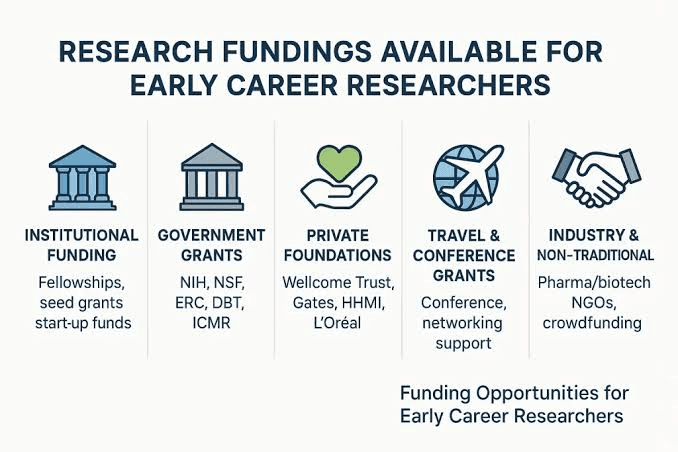
Corporate and nonprofit programs that fund student research
By
Princeton Journal of Pre-Collegiate Research
Read more

Science fair grants and material stipends explained
By
Princeton Journal of Pre-Collegiate Research
Read more

Crowdfunding a student research project: does it work
By
Princeton Journal of Pre-Collegiate Research
Read more

How much does a research project actually cost
By
Princeton Journal of Pre-Collegiate Research
Read more

How to ask your school to fund your project
By
Princeton Journal of Pre-Collegiate Research
Read more

Grants for high school research projects: what exists
By
Princeton Journal of Pre-Collegiate Research
Read more

How to start a research club at your school
By
Princeton Journal of Pre-Collegiate Research
Read more

How to organize a school research symposium
By
Princeton Journal of Pre-Collegiate Research
Read more

Turning a school club into a research pipeline
By
Princeton Journal of Pre-Collegiate Research
Read more

How to start a student research journal at your school
By
Princeton Journal of Pre-Collegiate Research
Read more

How to find a faculty sponsor for a research club
By
Princeton Journal of Pre-Collegiate Research
Read more

How to propose an independent study for research credit
By
Princeton Journal of Pre-Collegiate Research
Read more

Running a peer-review workshop at your school
By
Princeton Journal of Pre-Collegiate Research
Read more

How to get school funding for student research
By
Princeton Journal of Pre-Collegiate Research
Read more

How to do research as a team of students
By
Princeton Journal of Pre-Collegiate Research
Read more

Dividing work fairly in a group research project
By
Princeton Journal of Pre-Collegiate Research
Read more

Group research vs solo research: pros and cons
By
Princeton Journal of Pre-Collegiate Research
Read more

Resolving disagreements in group research
By
Princeton Journal of Pre-Collegiate Research
Read more
What to do when a co-author stops contributing
By
Princeton Journal of Pre-Collegiate Research
Read more