Comparing yourself to other student researchers
Princeton Journal of Pre-Collegiate Research
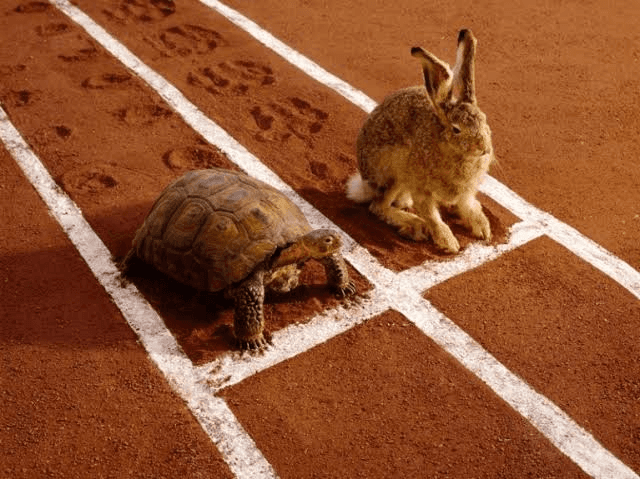
Comparing yourself to other student researchers: what it costs you and what to do instead
Comparison is one of the most consistent obstacles high school researchers face, and it rarely appears in guides about the research process. Students who have completed original work frequently abandon projects, undervalue their findings, or delay submission because another student's work appears more sophisticated, more published, or more credentialed. This post is written for high school students in grades 9 through 12 who are conducting original research and want to evaluate their progress honestly, without using other students as the measuring stick. After reading it, you will have a clearer framework for assessing your own work on its actual merits. When your research is ready for peer review, the Princeton Journal of Pre-Collegiate Research publishes original work across all academic disciplines.
Why comparing yourself to other student researchers undermines your work
Comparing yourself to other student researchers is a natural impulse, but it is an unreliable way to evaluate the quality or readiness of your own research. The only standard that determines whether your paper is publishable is whether it makes an original, well-supported contribution to its field. No other student's publication record changes that standard.
The core problem with comparison is that it measures the wrong variable. When a student looks at a peer who has published two papers and concludes that their own single project is insufficient, they are measuring output volume rather than research quality. Peer-reviewed journals do not accept papers because the author has published before. They accept papers because the work is original, methodologically sound, and clearly communicated.
A second problem is that comparison is almost always based on incomplete information. A student who appears to have published in a prestigious journal may have had access to a university lab, a parent with a PhD, or years of prior preparation that are invisible from the outside. Comparing your visible output to someone else's visible output ignores everything that produced that output.
According to the National Science Foundation's 2023 report on science and engineering indicators, the number of high school students participating in formal research activities has grown substantially over the past decade. This means more students are publishing, presenting, and competing than at any prior point. The visibility of peer achievement has increased, but the criteria for good research have not changed. A well-designed study with a clear research question, appropriate methodology, and honest analysis of results is publishable regardless of what other students in your school or region are producing.
The practical consequence of comparison is delay. Students who measure themselves against peers tend to keep revising indefinitely, waiting until their work feels comparable to some external standard that keeps shifting. This is one of the most common reasons strong papers never reach submission. The fix is to evaluate your work against the submission criteria of the journal you are targeting, not against another student's CV.
What happens when you shift from comparison to criteria?
When students stop comparing themselves to other student researchers and start measuring their work against explicit publication criteria, they make faster and better decisions about their research. The shift is not motivational. It is methodological.
Peer-reviewed journals evaluate submissions on a defined set of criteria: originality, clarity of research question, appropriateness of methodology, accuracy of analysis, and quality of written communication. These criteria are fixed. They do not change based on how many other students submitted that month or what a competing applicant's paper looks like.
To apply this shift in practice, a student should identify the specific submission guidelines for the journal they are targeting and use those guidelines as a checklist. For example, the submission guidelines for peer-reviewed student journals typically specify required sections, citation formats, abstract length, and methodological standards. A student who works through that checklist systematically is doing something far more productive than comparing their work to a peer's published paper.
This approach also produces a more accurate self-assessment. A student who completes the checklist and finds that their methodology section is thin has identified a specific, fixable problem. A student who concludes that their paper is weaker because a classmate has published more has identified nothing actionable.
Browsing published issues of a student journal is a legitimate and useful form of comparison, but only when used to understand what a published paper in your field looks like structurally, not to rank yourself against the authors. Reading published work to understand scope, citation density, and section length is research skill development. Reading it to decide whether you are as talented as the authors is not.
What are the most common mistakes students make when comparing themselves to other researchers?
The most common mistake is treating another student's publication as evidence of superior research ability, when it is more often evidence of earlier access to resources, mentorship, or research infrastructure. This leads students to underestimate work that is genuinely publishable and to delay or abandon submission unnecessarily.
The first specific mistake is conflating research output with research quality. A student who has published three short papers has not necessarily produced better science than a student who has spent two years on a single, rigorous original study. Publication count is not a quality metric. Journals that conduct genuine peer review evaluate each submission independently. Understanding academic publishing statistics for student researchers can help calibrate realistic expectations about acceptance rates and timelines.
The second mistake is using social media and competition results as a proxy for research quality. Science fair placements, competition awards, and social media visibility are influenced by presentation skill, topic popularity, and regional competition density. None of these factors are part of peer review. A paper that did not place at a regional fair may still be fully publishable in a peer-reviewed journal.
The third mistake is assuming that co-authored papers represent a higher standard of work. Co-authorship reflects collaboration, not elevated quality. A sole-authored paper by a high school student can meet publication standards just as readily as a co-authored one. If you are considering collaborative work, understanding how to co-author a paper with another student is worth reviewing before you begin.
The fourth mistake is interpreting a peer's acceptance as evidence that your own rejection was about ability. Desk rejections and peer review decisions are based on fit, methodology, and presentation. A paper rejected by one journal may be accepted by another with a different scope. Rejection is part of the process for professional researchers as well as student researchers.
How to evaluate your research on its own terms, step by step
The following process replaces comparison with criteria. Work through each step before deciding whether your research is ready to submit.
Identify your research question. Write it in one sentence. It should be specific, answerable, and original. If you cannot write it in one sentence, the question needs narrowing before anything else.
Confirm your methodology is appropriate to your question. If your question is about a relationship between two variables, you need a design that tests that relationship. If your question is interpretive, your methodology should be qualitative and clearly defined. Avoid common errors by reviewing common statistical mistakes in student papers before finalising your analysis.
Check your results against your question. Do your findings actually answer what you set out to investigate? If the results address a different question than the one you asked, revise the framing or acknowledge the limitation explicitly.
Review the submission guidelines for your target journal. Every requirement in those guidelines is a checklist item. Work through it line by line. Do not submit until every item is addressed.
Read one published paper in your discipline from a student journal. Use it to calibrate section length, citation style, and abstract format only. Do not use it to rank yourself against the author.
Ask one person who has not read your paper to read the abstract and tell you what question it answers. If their answer matches your research question, your communication is clear. If it does not, revise the abstract before submission.
Submit your research. If you have worked through this checklist and your paper meets the submission criteria, submit it. Review the submission guidelines at princeton-jpcr.org/submit and proceed.
PJPCR publishes original research across all academic disciplines. If your work is ready for peer review, review the submission guidelines at princeton-jpcr.org/submit.
Frequently asked questions about comparing yourself to other student researchers
What does original research mean for a high school student?
Original research means investigating a question that has not been answered in exactly the same way using the same data or population. It does not require a novel discovery. A high school student replicating a known methodology with a new sample, location, or variable is producing original work. The originality is in the contribution, not the complexity of the equipment used.
How long does it take to get a high school research paper peer-reviewed and published?
The standard peer review and publication timeline at most student journals is 2 to 3 months from submission to a final decision. This includes initial screening, reviewer assignment, and at least one round of feedback. A fast-track option is available for students who need a quicker turnaround, which can bring the timeline down to 2 to 4 weeks. Planning your submission with this timeline in mind is important if you have a specific use for the publication, such as a college application or a research presentation.
Do I need a university mentor or lab access to publish research as a high school student?
No. Many publishable high school research papers are conducted without university lab access or a faculty mentor. Research in fields such as social sciences, humanities, mathematics, computer science, and environmental science can be conducted with publicly available data, survey tools, or field observation. What matters is that the methodology is appropriate to the question and the analysis is honest. Reviewing free tools available to high school researchers can help identify what resources are accessible without institutional affiliation.
What makes a high school research paper publishable rather than just well-written?
A publishable paper makes an original contribution, uses a methodology appropriate to its research question, and presents results with honest analysis including limitations. A well-written paper may do none of these things. Strong prose is necessary but not sufficient. Reviewers assess whether the study design could actually answer the research question, whether the analysis is valid, and whether the conclusions are supported by the data. A paper with modest writing but rigorous methodology will advance further in peer review than a polished paper with a flawed design.
What kinds of research does PJPCR publish, and is it peer-reviewed?
PJPCR publishes original research by pre-collegiate students across the sciences, social sciences, humanities, and interdisciplinary fields. All submissions undergo peer review conducted by qualified reviewers before any acceptance decision is made. Submission and peer review are free. A publication fee applies for accepted papers. You can review the full peer review process and the submission criteria before preparing your manuscript.
What to take away from this
Comparing yourself to other student researchers is a natural response to a competitive environment, but it is not a useful tool for evaluating your work. The only standard that matters is whether your research is original, methodologically sound, and clearly communicated. Other students' publication records, competition placements, and institutional affiliations are not part of that standard.
The most productive thing a student can do at any stage of the research process is to measure their work against explicit criteria: the research question, the methodology, the analysis, and the submission guidelines of the journal they are targeting. That process produces actionable information. Comparison produces anxiety and delay.
If your research is ready for peer review, submit it to the Princeton Journal of Pre-Collegiate Research at princeton-jpcr.org/submit.
Read More

How to write a grant proposal as a student
By
Princeton Journal of Pre-Collegiate Research
Read more
Free resources that replace research funding
By
Princeton Journal of Pre-Collegiate Research
Read more
Corporate and nonprofit programs that fund student research
By
Princeton Journal of Pre-Collegiate Research
Read more

Science fair grants and material stipends explained
By
Princeton Journal of Pre-Collegiate Research
Read more

Crowdfunding a student research project: does it work
By
Princeton Journal of Pre-Collegiate Research
Read more

How much does a research project actually cost
By
Princeton Journal of Pre-Collegiate Research
Read more

How to ask your school to fund your project
By
Princeton Journal of Pre-Collegiate Research
Read more

Grants for high school research projects: what exists
By
Princeton Journal of Pre-Collegiate Research
Read more

How to start a research club at your school
By
Princeton Journal of Pre-Collegiate Research
Read more

How to organize a school research symposium
By
Princeton Journal of Pre-Collegiate Research
Read more

Turning a school club into a research pipeline
By
Princeton Journal of Pre-Collegiate Research
Read more

How to start a student research journal at your school
By
Princeton Journal of Pre-Collegiate Research
Read more

How to find a faculty sponsor for a research club
By
Princeton Journal of Pre-Collegiate Research
Read more

How to propose an independent study for research credit
By
Princeton Journal of Pre-Collegiate Research
Read more

Running a peer-review workshop at your school
By
Princeton Journal of Pre-Collegiate Research
Read more

How to get school funding for student research
By
Princeton Journal of Pre-Collegiate Research
Read more

How to do research as a team of students
By
Princeton Journal of Pre-Collegiate Research
Read more

Dividing work fairly in a group research project
By
Princeton Journal of Pre-Collegiate Research
Read more

Group research vs solo research: pros and cons
By
Princeton Journal of Pre-Collegiate Research
Read more

Resolving disagreements in group research
By
Princeton Journal of Pre-Collegiate Research
Read more
What to do when a co-author stops contributing
By
Princeton Journal of Pre-Collegiate Research
Read more