APA format for high school research papers: complete guide
Princeton Journal of Pre-Collegiate Research

APA format for high school research papers: a complete guide
This guide answers every core question about APA format for high school research papers. It is written for students in grades 9 through 12 who are preparing a research paper for class, a competition, or journal submission. After reading it, you will be able to format a title page, in-text citations, and a reference list correctly, and you will know the most common formatting errors that cause papers to be rejected. Students whose work is ready for peer-reviewed publication can submit to the Princeton Journal of Pre-Collegiate Research, an independent academic journal that publishes original research by pre-collegiate students across all disciplines.
What is APA format and why do high school research papers use it?
APA format is the citation and document style developed by the American Psychological Association. It is the standard format for research in psychology, education, social sciences, and many natural sciences. High school students are required to use it because it teaches two non-negotiable academic skills: crediting sources precisely and presenting data in a form that reviewers can verify.
The current edition is the 7th edition, published by the American Psychological Association in 2019. It introduced several changes from the 6th edition, including the removal of the running head requirement for student papers, a simplified title page format, and updated rules for digital sources. Many online guides still reflect the 6th edition rules. Students using those guides will format their papers incorrectly.
APA is preferred over MLA in research-heavy disciplines because it places the publication year immediately after the author name in citations. This allows readers to assess how current a source is without consulting the reference list. In fields where evidence changes quickly, such as psychology or biology, that distinction matters.
If you are preparing a paper for submission to an academic journal, confirm which style the journal requires before formatting. PJPCR accepts submissions in APA, MLA, and Chicago style. The submission guidelines specify formatting requirements for each discipline section.
How do you format a high school research paper in APA style, step by step?
A correctly formatted APA student paper has four required components: a title page, an abstract (when required), the body with in-text citations, and a reference list. Each component follows specific rules defined in the APA Publication Manual, 7th edition. The process takes less time when completed in order rather than retroactively.
Step 1: Set up the document correctly
Use 12-point Times New Roman font throughout. Set all margins to one inch on every side. Double-space all text, including the reference list. Do not add extra spacing between paragraphs. Indent the first line of every paragraph by 0.5 inches using the paragraph settings in your word processor, not the Tab key.
Step 2: Format the title page
For student papers under the 7th edition, the title page includes five elements: the paper title, the author name, the institutional affiliation (your school), the course name and number, and the submission date. Place the title in bold, centered, in the upper half of the page. Do not include a running head. The 7th edition removed this requirement for student papers.
Step 3: Write and place the abstract
Not all student papers require an abstract. Check with your instructor or the journal you are submitting to. When required, the abstract appears on its own page after the title page. It is a single paragraph of 150 to 250 words. It is not indented. It summarizes the research question, methodology, key findings, and conclusion. Do not cite sources in the abstract.
Step 4: Format in-text citations correctly
Every claim drawn from a source requires an in-text citation. The standard APA format is: (Author Last Name, Year). For a direct quotation, add the page number: (Author Last Name, Year, p. X). If a source has two authors, name both every time: (Garcia & Lee, 2021). For three or more authors, use the first author's name followed by "et al.": (Singh et al., 2020). Place the citation inside the sentence's closing punctuation for paraphrases, and after the closing quotation mark for direct quotes.
Step 5: Build the reference list
The reference list begins on a new page after the body of the paper. The heading "References" is centered and bolded. Entries are alphabetized by the first author's last name. Each entry uses a hanging indent: the first line is flush left, and all subsequent lines are indented 0.5 inches. Every source cited in the text must appear in the reference list, and every entry in the reference list must be cited in the text.
Step 6: Format common source types correctly
Journal article format: Author, A. A., & Author, B. B. (Year). Title of article. Journal Name, Volume(Issue), page range. DOI or URL. Book format: Author, A. A. (Year). Title of book. Publisher. Website format: Author, A. A. (Year, Month Day). Title of page. Website Name. URL. For sources without a publication date, use "n.d." in place of the year.
What happens after you apply APA format to a journal submission?
Formatting is the first thing a journal editor reviews before a paper reaches peer review. A paper submitted in incorrect format signals that the author has not read the submission guidelines carefully. At many journals, including those that publish student research, improper formatting is grounds for desk rejection before the content is evaluated at all.
Desk rejection means the editor returns the paper without sending it to reviewers. It is not a judgment on the quality of the research. It means the submission did not meet the journal's baseline requirements. The most common formatting-related reasons for desk rejection are: incorrect citation style, missing reference list entries, inconsistent heading levels, and abstracts that exceed the stated word limit.
Once a paper clears the formatting review, it moves to the peer review process, where qualified reviewers evaluate the methodology, originality, and contribution of the work. At PJPCR, the standard review timeline is 2 to 3 months. A fast-track option is available for students who need a quicker turnaround.
Students preparing papers for publication should also review discipline-specific research guides to confirm that the paper's structure meets the expectations of reviewers in their field, not just the general APA formatting requirements.
What are the most common APA formatting mistakes high school students make?
The four errors below appear in the majority of student papers submitted with APA format errors. Each one is correctable before submission.
The first error is using 6th edition rules instead of 7th edition rules. The 7th edition, published in 2019, changed the title page format, removed the running head requirement for student papers, and updated DOI formatting. Students who use older guides or textbooks will apply outdated rules. The fix is to use the official APA Style website at apastyle.apa.org or the printed 7th edition manual.
The second error is omitting the DOI from journal article references. The 7th edition requires a DOI (Digital Object Identifier) whenever one is available. A DOI is a permanent link that begins with "https://doi.org/". Leaving it out makes the source harder to verify. The fix is to search the article title in the Crossref database at crossref.org to retrieve the DOI.
The third error is inconsistent heading levels. APA uses five levels of headings, each with a specific format. Level 1 headings are centered and bold. Level 2 headings are left-aligned and bold. Students frequently mix these formats or apply bold to subheadings that should not have it. The fix is to assign heading levels before drafting and apply them consistently throughout.
The fourth error is citing a source in the text but omitting it from the reference list, or including a reference list entry for a source not cited in the body. The American Psychological Association states explicitly that these two lists must correspond exactly. A mismatch is one of the most common causes of point deductions in academic assessments and a flag in journal manuscript review.
How to apply APA format to your research paper: a step-by-step checklist
Confirm you are using the 7th edition of the APA Publication Manual or the official APA Style website.
Set your document to 12-point Times New Roman, one-inch margins, and double spacing throughout.
Format the title page with the paper title in bold, your name, school, course name, and submission date. Remove any running head.
Write the abstract in a single paragraph of 150 to 250 words on its own page, if required.
Insert in-text citations for every paraphrase and direct quotation using the (Author, Year) format.
Build the reference list on a new page, alphabetized by author last name, with a hanging indent for each entry.
Cross-check every in-text citation against the reference list to confirm they match exactly.
Verify that every journal article reference includes a DOI where one is available.
Review the submission guidelines for the journal or assignment to confirm any additional formatting requirements.
If your paper presents original research and meets the criteria for peer-reviewed publication, PJPCR accepts submissions across all academic disciplines. Review the published issues to see the scope and standard of work the journal has accepted.
PJPCR publishes original research across all academic disciplines. If your work is formatted and ready for peer review, review the submission guidelines at princeton-jpcr.org/submit.
Frequently asked questions about APA format for high school research papers
What is APA format and when should high school students use it?
APA format is the citation and document style published by the American Psychological Association, currently in its 7th edition (2019). High school students should use it when writing research papers in psychology, social sciences, natural sciences, or any course or journal that specifies APA. It is the required format for most peer-reviewed journals in these disciplines.
If your teacher or the journal you are submitting to does not specify a format, confirm before defaulting to APA. Some humanities journals require Chicago or MLA style instead.
How long does it take to format a research paper in APA correctly?
Formatting a complete paper in APA style takes two to four hours for a student doing it for the first time, and under one hour for a student who has done it before. The reference list is the most time-consuming component. Building it as you write, rather than after the paper is complete, reduces formatting time significantly.
If you are submitting to a peer-reviewed journal, factor in the review timeline. PJPCR's standard review and publication timeline is 2 to 3 months. A fast-track option is available for students who need a quicker turnaround.
Do I need a mentor or university affiliation to submit a research paper to a journal?
No. High school students do not need a university affiliation or faculty mentor to submit original research to a peer-reviewed journal. Many student journals, including PJPCR, accept submissions directly from pre-collegiate researchers. The quality and originality of the research determines eligibility, not institutional affiliation.
Having a mentor who can review your methodology and writing before submission is beneficial, but it is not a requirement. Students who have conducted independent research may submit without one.
What makes a high school research paper ready for APA-formatted journal submission?
A paper is ready for journal submission when it presents an original research question, a defined methodology, findings supported by data or analysis, and a conclusion that addresses the question. APA formatting is a baseline requirement, not a quality marker. A correctly formatted paper with weak methodology will not pass peer review.
Reviewers evaluate whether the research question is specific and testable, whether the methodology is appropriate for the question, and whether the conclusions are supported by the evidence presented. Strong formatting signals professionalism; it does not substitute for rigorous research.
What kinds of research does PJPCR publish, and is it peer reviewed?
PJPCR publishes original research by pre-collegiate students across all academic disciplines, including the sciences, social sciences, humanities, and interdisciplinary fields. Submission and peer review are free. A publication fee applies for accepted papers. The journal does not guarantee acceptance; all submissions are evaluated through a rigorous peer review process conducted by qualified reviewers.
Students interested in submitting should review the submission guidelines to confirm their paper meets the journal's scope and formatting requirements before submitting.
What to do next
APA format for high school research papers follows a consistent set of rules defined in the 7th edition of the APA Publication Manual. The most important actions are setting up the document correctly before writing, building citations as you draft rather than after, and cross-checking the in-text citations against the reference list before submission. The four most common errors, using outdated 6th edition rules, omitting DOIs, inconsistent heading levels, and mismatched citation and reference lists, are all correctable with a careful pre-submission review.
Students conducting original research across any discipline are encouraged to explore the discipline-specific research guides on this site to confirm their paper meets both the formatting and methodological standards expected by peer reviewers. If your research is ready for peer review, submit it to PJPCR at princeton-jpcr.org/submit.
Read More

How to write a grant proposal as a student
By
Princeton Journal of Pre-Collegiate Research
Read more
Free resources that replace research funding
By
Princeton Journal of Pre-Collegiate Research
Read more
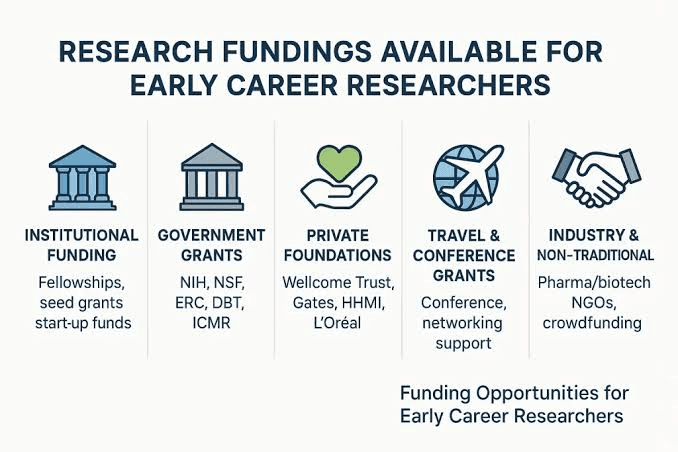
Corporate and nonprofit programs that fund student research
By
Princeton Journal of Pre-Collegiate Research
Read more

Science fair grants and material stipends explained
By
Princeton Journal of Pre-Collegiate Research
Read more

Crowdfunding a student research project: does it work
By
Princeton Journal of Pre-Collegiate Research
Read more

How much does a research project actually cost
By
Princeton Journal of Pre-Collegiate Research
Read more

How to ask your school to fund your project
By
Princeton Journal of Pre-Collegiate Research
Read more

Grants for high school research projects: what exists
By
Princeton Journal of Pre-Collegiate Research
Read more

How to start a research club at your school
By
Princeton Journal of Pre-Collegiate Research
Read more

How to organize a school research symposium
By
Princeton Journal of Pre-Collegiate Research
Read more

Turning a school club into a research pipeline
By
Princeton Journal of Pre-Collegiate Research
Read more

How to start a student research journal at your school
By
Princeton Journal of Pre-Collegiate Research
Read more

How to find a faculty sponsor for a research club
By
Princeton Journal of Pre-Collegiate Research
Read more

How to propose an independent study for research credit
By
Princeton Journal of Pre-Collegiate Research
Read more

Running a peer-review workshop at your school
By
Princeton Journal of Pre-Collegiate Research
Read more

How to get school funding for student research
By
Princeton Journal of Pre-Collegiate Research
Read more

How to do research as a team of students
By
Princeton Journal of Pre-Collegiate Research
Read more

Dividing work fairly in a group research project
By
Princeton Journal of Pre-Collegiate Research
Read more

Group research vs solo research: pros and cons
By
Princeton Journal of Pre-Collegiate Research
Read more

Resolving disagreements in group research
By
Princeton Journal of Pre-Collegiate Research
Read more
What to do when a co-author stops contributing
By
Princeton Journal of Pre-Collegiate Research
Read more