Does Research Help You Get Into Ivy League Schools?
Princeton Journal of Pre-Collegiate Research
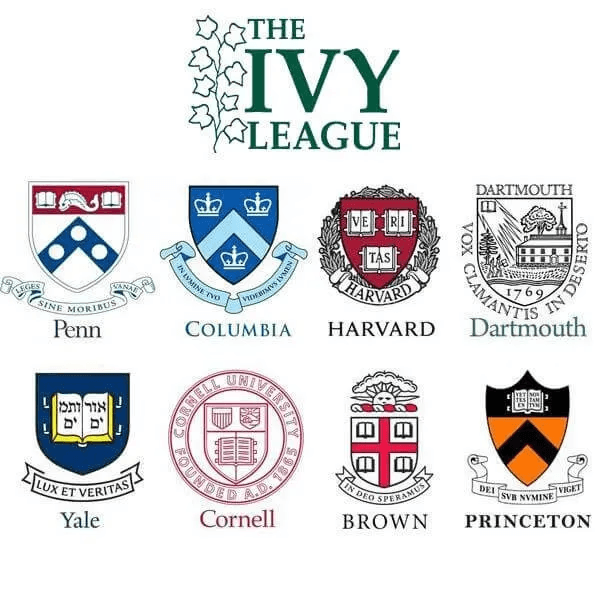
This post answers whether conducting and publishing original research improves your chances of admission to highly selective universities, including Ivy League schools. It is written for high school students in grades 10 through 12 and their parents. After reading it, you will understand exactly what admissions officers assess when they encounter research on an application, what type of research actually matters, and what it cannot do on its own. If your research is complete and ready for peer review, the Princeton Journal of Pre-Collegiate Research publishes original work across all academic disciplines.
Does research help you get into Ivy League schools?
Yes, original research can strengthen an Ivy League application, but not because it fills a checkbox. Admissions officers at schools like Harvard, Princeton, and Yale evaluate research as evidence of intellectual depth, sustained curiosity, and the ability to contribute original thinking. A published paper or a credible research project demonstrates those qualities more concretely than a grade or test score alone.
Harvard's Common Data Set consistently shows that the single most important admissions factor is "rigor of secondary school record," followed closely by "character/personal qualities" and "talent/ability." Research does not appear as a standalone criterion. What it does is provide evidence for several of those criteria simultaneously. A student who spent eight months investigating a genuine question, collected original data, and submitted that work to peer review has demonstrated intellectual initiative in a way that a transcript cannot capture.
The distinction that matters is between research as a credential and research as a demonstration of thinking. Admissions readers at selective universities read thousands of applications. They are trained to distinguish between students who pursued a research project because it was genuinely interesting to them and students who pursued it because someone told them it would help their application. The former reads as authentic. The latter does not.
What makes research compelling in an admissions context is specificity. A student who can explain, in their own words, what question they were trying to answer, why that question mattered, what they found, and what they would do differently, is demonstrating exactly the kind of intellectual engagement that selective universities are selecting for. The research itself is the evidence. The ability to discuss it fluently is the signal.
Published research adds one additional layer of credibility. When a paper has been through genuine peer review, it has been evaluated by qualified reviewers who did not know the author. That external validation is meaningful. It tells an admissions reader that the work met a standard set by people outside the student's own school or mentor relationship. If you want to understand what makes a paper reach that standard, reviewing what makes a research paper get rejected is a useful starting point before you submit.
What type of research actually moves the needle in admissions?
The research that carries the most weight in Ivy League admissions is original, question-driven work where the student made genuine intellectual choices. That means designing a study, not just summarising existing literature. It means grappling with a real methodological problem. It means having something to say about what the findings mean.
According to MIT Admissions, what evaluators look for is evidence that a student has "gone beyond the classroom" in a way that reflects genuine passion, not resume construction. The phrase matters. Going beyond the classroom means the student identified a question that existing coursework did not answer, and then did something about it.
Research that tends to read as substantive in applications shares several features. The student can name the specific gap in existing knowledge they were trying to address. The methodology was chosen deliberately, not arbitrarily. The results, even if inconclusive, were interpreted honestly. And the student can speak to limitations in their own work without being prompted.
Understanding how to identify that gap before you begin is one of the most underrated skills in student research. If you are still in the early stages, the guide on what a research gap is and how to find one explains the process in practical terms.
Research that tends to read as less substantive, regardless of how polished the final paper looks, is work where the student followed a prescribed protocol without making independent decisions. Lab placements where a student ran someone else's experiment are valuable experiences, but they are different from independent research. Admissions readers make this distinction routinely.
What are the most common mistakes students make when using research in their applications?
The most consequential mistake is treating research as a line item rather than a narrative. A student who lists a published paper on their activities list but cannot discuss it fluently in an interview or essay has undermined the very thing the publication was supposed to demonstrate. Admissions officers at highly selective schools conduct interviews precisely to test whether students can engage with their own work at depth. A published paper that a student cannot explain is worse than no paper at all.
The second mistake is choosing a topic for its perceived impressiveness rather than genuine interest. Research on machine learning, climate change, or cancer biology is not inherently more compelling than research on local voting patterns, historical memory, or the acoustics of a specific instrument. What makes a topic compelling is the quality of the question and the rigor of the approach. According to Yale's admissions guidance, evaluators are looking for authentic intellectual engagement, not topic prestige.
The third mistake is submitting to a publication without understanding what peer review actually means. Not all student journals conduct genuine peer review. A paper that was accepted without substantive reviewer feedback does not carry the same credibility as one that went through a real editorial process with revision requests. If you are evaluating where to submit, understanding the difference between genuine peer review and nominal acceptance is essential. The guide on qualitative versus quantitative research methods is also worth reading before you finalise your methodology, since methodological clarity is one of the first things reviewers assess.
The fourth mistake is starting too late. A research project that is rushed in senior year to meet application deadlines rarely produces work of the depth that admissions readers find compelling. The most credible student research takes six months to a year from question formation to submission-ready manuscript.
How to use research effectively in your Ivy League application, step by step
Start with a genuine question. Identify something you actually want to know that existing sources do not fully answer. Use the guide on how to come up with a research question in high school if you are at this stage.
Choose a methodology that fits the question. Your method should be determined by what your question requires, not by what is easiest. Document your methodological choices and the reasoning behind them.
Collect and analyse data rigorously. Whether your data is quantitative, qualitative, or archival, your analysis should be honest about what it shows and what it does not show.
Write a manuscript that stands on its own. A publishable paper is not a class essay. It has a clear research question, a defined methodology, results presented without editorialising, and a discussion that interprets findings in the context of existing knowledge.
Submit to a peer-reviewed journal before your application deadline. Standard review timelines at most journals are two to three months. If you need a faster turnaround, a fast-track option is available for students who need a quicker turnaround at some journals, including PJPCR.
Prepare to discuss your work fluently. Before any interview, be able to answer: What question did you ask? Why did it matter? What did you find? What would you do differently? What are the limitations of your conclusions?
Integrate the research into your application narrative. The activities list, the additional information section, and your essays should together tell a coherent story about why this question mattered to you and what pursuing it taught you.
PJPCR publishes original research across all academic disciplines. If your work is ready for peer review, review the submission guidelines at princeton-jpcr.org.
Frequently asked questions about research and Ivy League admissions
What does "original research" mean in a high school admissions context?
Original research means work where the student formulated an independent question, designed an approach to answer it, collected or analysed data, and drew conclusions. It is distinct from a research paper that summarises existing literature. Admissions readers use the term to mean work that adds something new, even if modest in scope, rather than synthesising what is already known.
How long does it take to publish a research paper as a high school student?
The standard peer review and publication timeline at most student journals is two to three months from submission to a final decision. PJPCR's standard timeline is two to three months. A fast-track option is available for students who need a quicker turnaround. Factor this into your application timeline: a paper submitted in August of senior year may not be published before early decision deadlines.
Do I need a university mentor to submit research to a journal?
No. A mentor strengthens a project, but it is not a submission requirement at most peer-reviewed student journals, including PJPCR. What matters is the quality of the research itself: the clarity of the question, the rigor of the methodology, and the honesty of the analysis. Many strong student papers are produced with guidance from a high school teacher or independently.
What makes a high school research paper publishable rather than just well-written?
A publishable paper makes an original contribution, however small. It identifies a specific gap in existing knowledge, uses a methodology appropriate to the question, presents results accurately, and interprets findings with appropriate caution. A well-written paper that only summarises existing literature is not publishable in a peer-reviewed journal, regardless of how clearly it is written. Reviewers assess contribution first, then execution.
What kinds of research does PJPCR publish, and is it peer reviewed?
PJPCR publishes original research by pre-collegiate students across STEM, humanities, social sciences, and interdisciplinary fields. All submissions undergo genuine peer review by qualified reviewers. Acceptance is not guaranteed. Submission and peer review are free; a publication fee applies for accepted papers. You can browse the published research and resources on the site to assess the standard and scope of work the journal accepts.
What to take away from this
Research does help with Ivy League admissions, but the mechanism is specific. It works when it demonstrates genuine intellectual engagement, when the student can discuss it fluently, and when the work itself reflects independent thinking rather than supervised task completion. A published paper adds a layer of external validation that strengthens that demonstration. It does not, on its own, guarantee admission to any school.
Start with a real question. Choose a rigorous method. Write a manuscript that stands on its own. Submit it to a journal that conducts genuine peer review. And be prepared to talk about what you learned, including what did not work, with clarity and confidence. That combination is what admissions readers at selective universities are actually looking for.
If your research is complete and ready for peer review, submit it to PJPCR at princeton-jpcr.org.
Read More

APA format for high school research papers: complete guide
By
RISE Research
Read more

MLA format for research papers: when and how
By
RISE Research
Read more

APA vs MLA vs Chicago: which to use for your paper
By
RISE Research
Read more

How to cite a dataset
By
RISE Research
Read more

In-text citations vs footnotes: how each works
By
RISE Research
Read more

What is a p-value, explained for high school researchers
By
RISE Research
Read more

What is regression analysis and when do you use it
By
RISE Research
Read more

What is standard deviation and why it matters
By
RISE Research
Read more

What is a t-test and when do you need one
By
RISE Research
Read more

What is effect size and why reviewers care
By
RISE Research
Read more

Common statistical mistakes in student papers
By
RISE Research
Read more

Research for biology majors: what to publish before applying
By
https://princeton-jpcr.org/
Read more

Research for economics majors
By
https://princeton-jpcr.org/
Read more

Research for political science majors
By
https://princeton-jpcr.org/
Read more

Research for English and humanities majors
By
https://princeton-jpcr.org/
Read more

Research for neuroscience majors
By
https://princeton-jpcr.org/
Read more

Undecided major: what research keeps your options open
By
https://princeton-jpcr.org/
Read more

Summer research timeline: June to August week by week
By
Princeton Journal of Pre-Collegiate Research
Read more

Research goals to set at the start of the school year
By
Princeton Journal of Pre-Collegiate Research
Read more

How to finish your research paper before finals season
By
Princeton Journal of Pre-Collegiate Research
Read more

New year research resolutions that actually stick
By
Princeton Journal of Pre-Collegiate Research
Read more